Last updated November 22, 2026
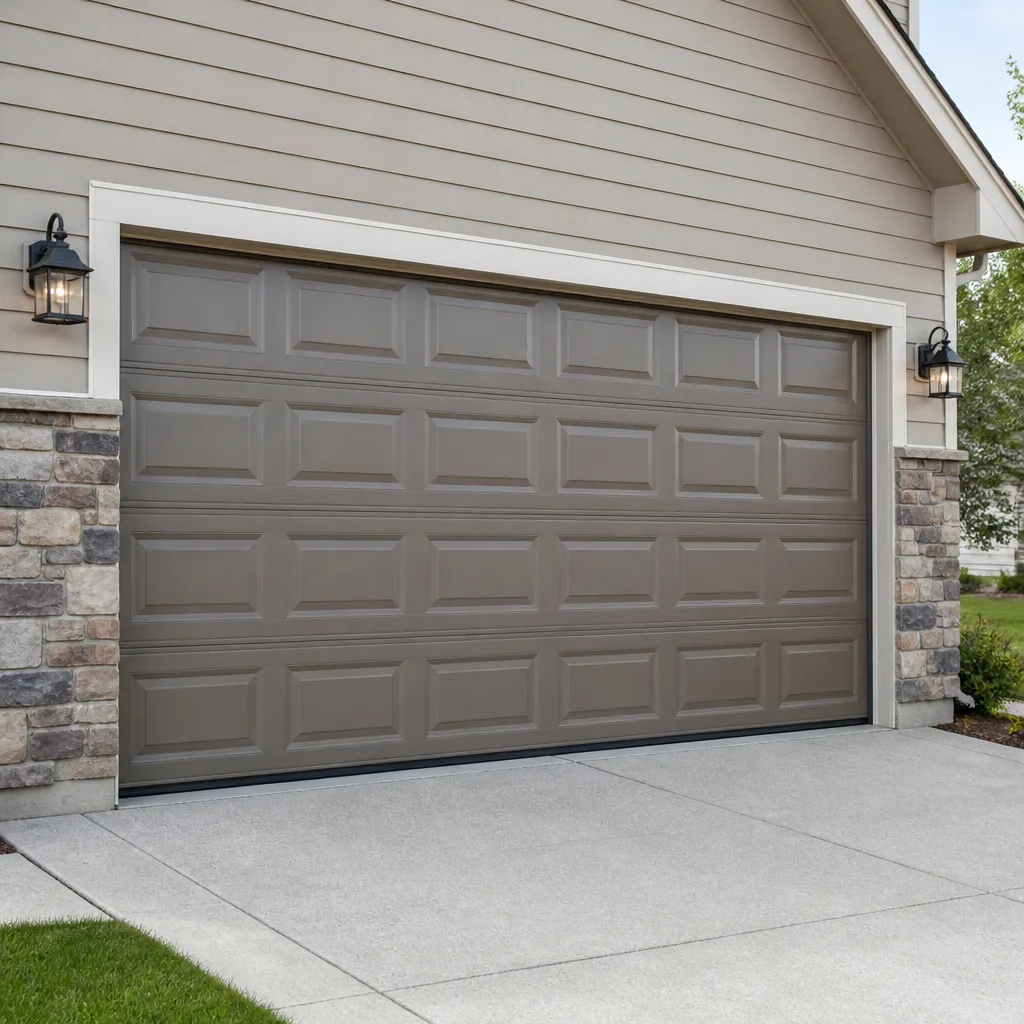 Raised-panel steel
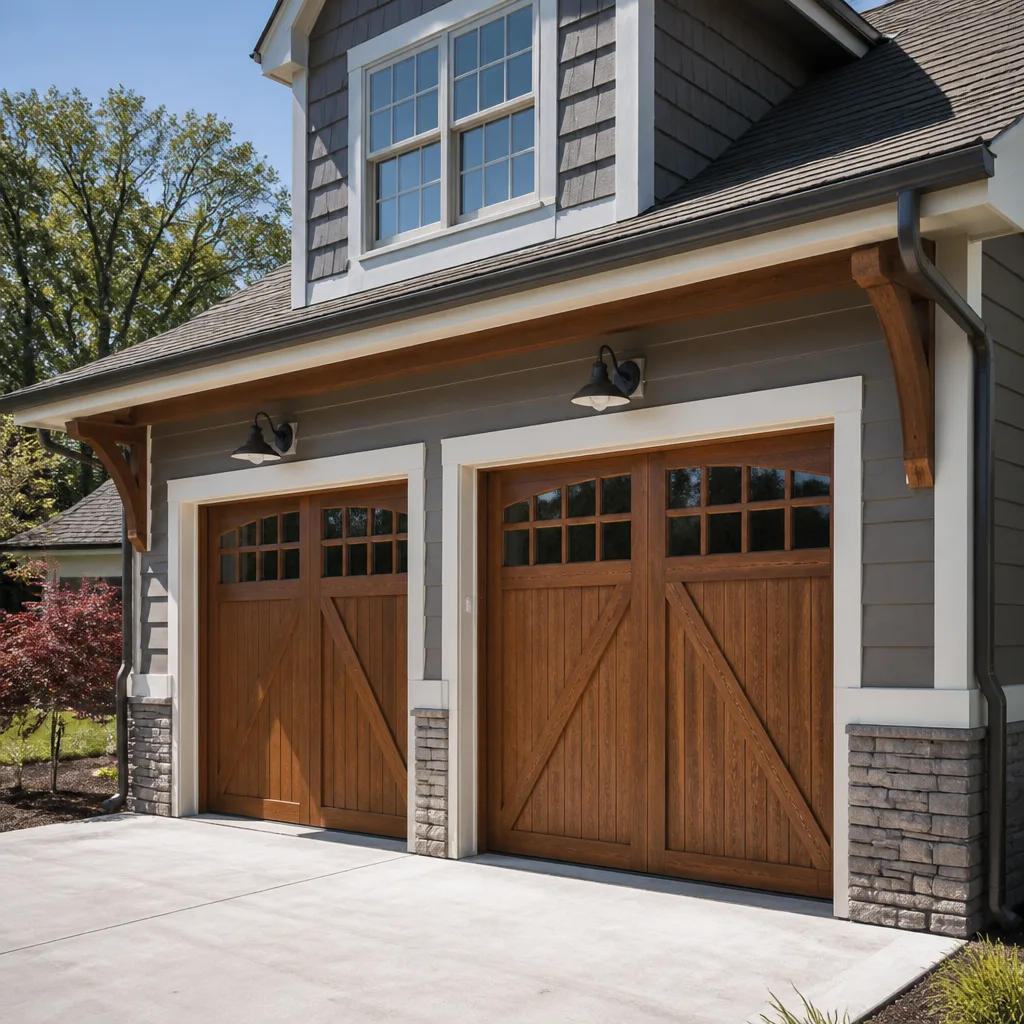 Carriage house
 Modern flush
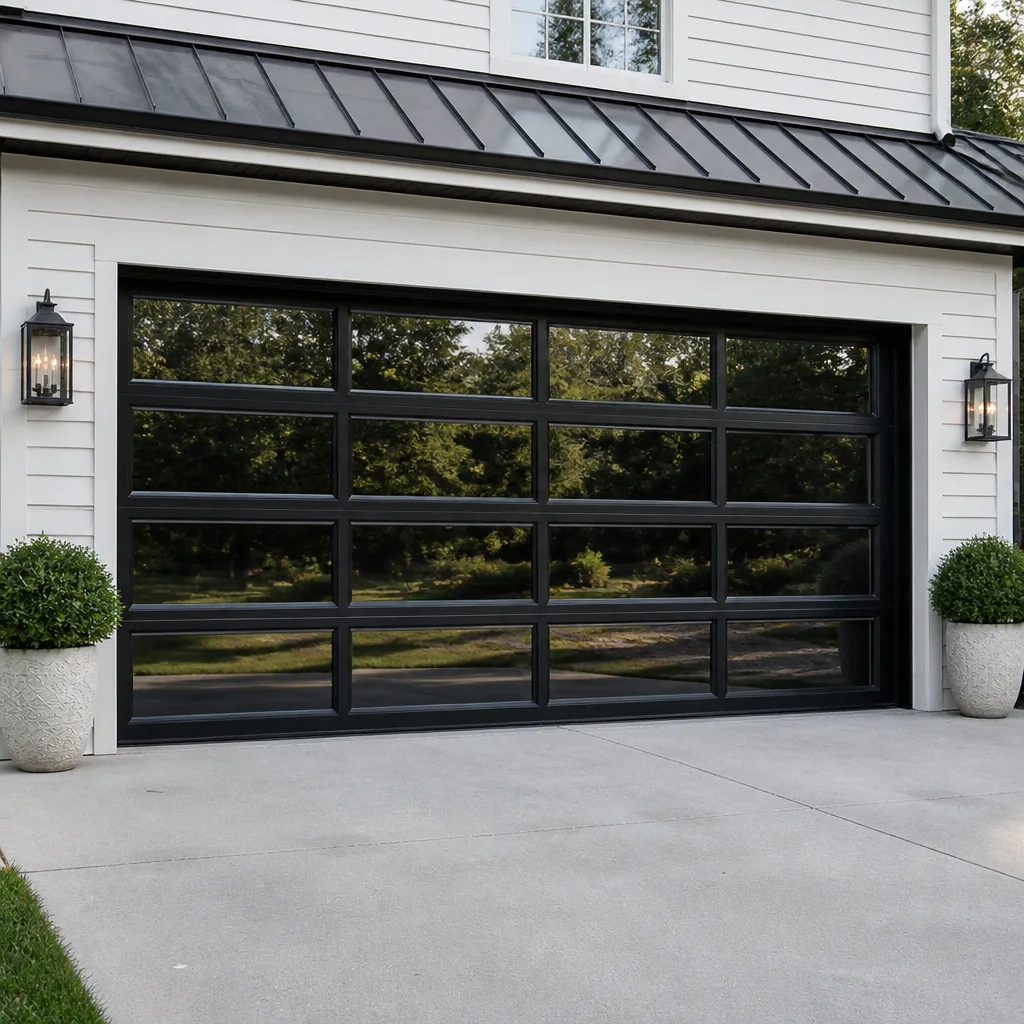 Full-view glass
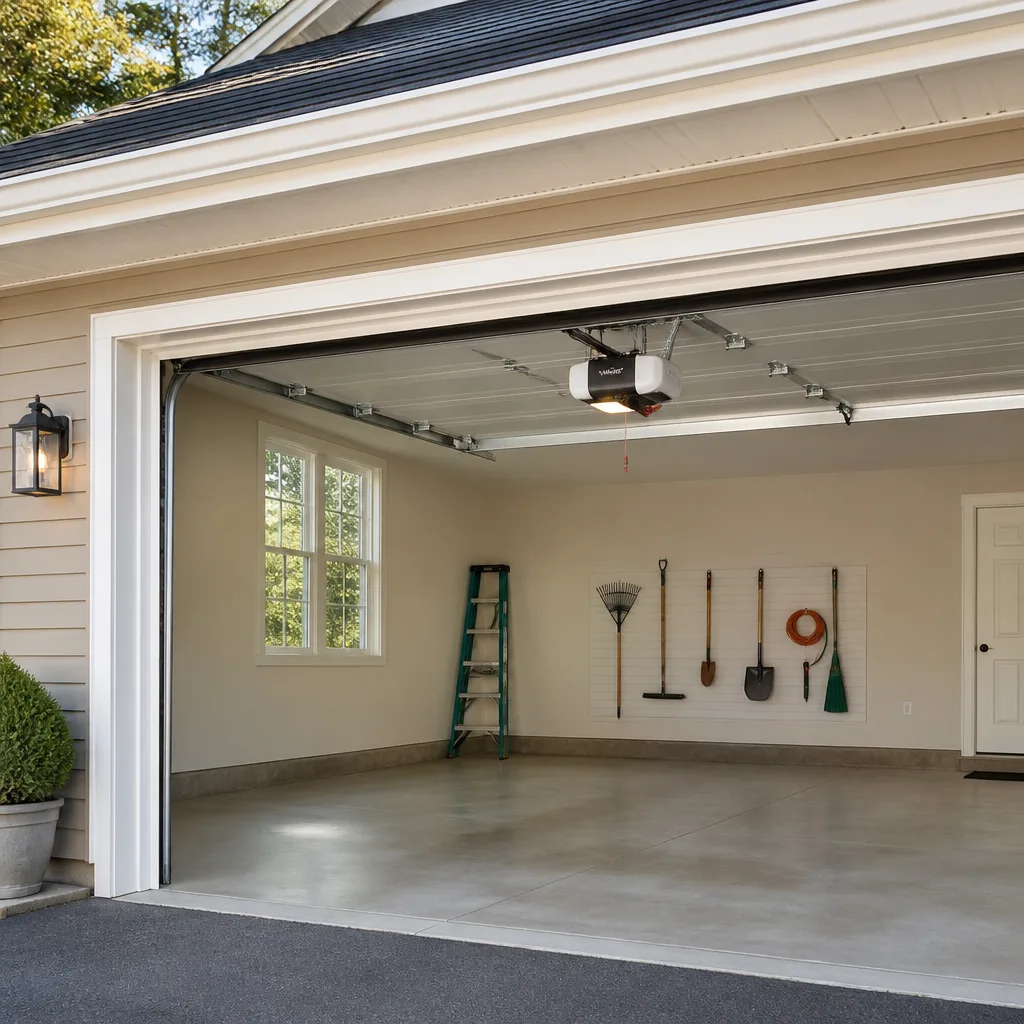 LiftMaster openers
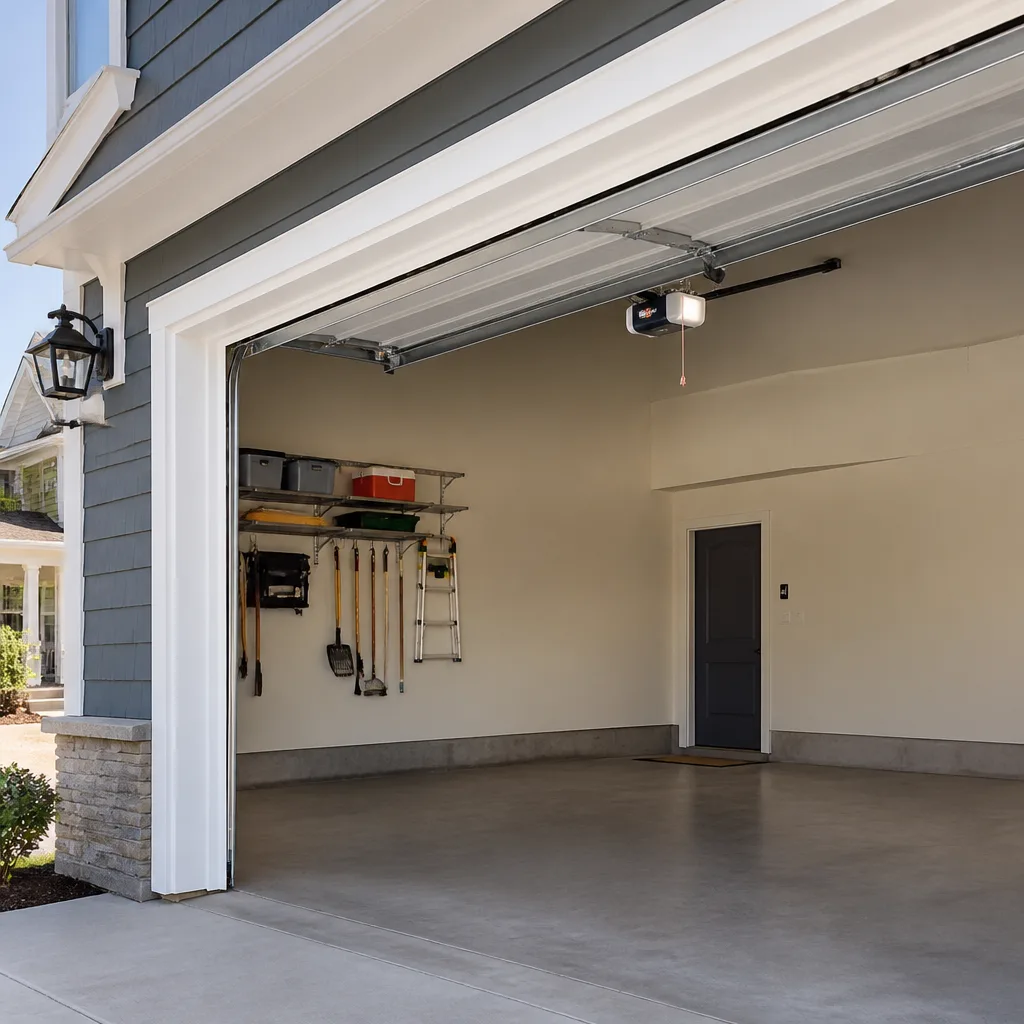 Chamberlain openers
Full 25-point door and opener safety check with every visit - springs, cables, rollers, tracks, and your LiftMaster or Chamberlain opener included
You get a price before we start. It does not change when the pro arrives.
Get your free estimateGarage Door Emergency Preparedness Guide for Eden Prairie Homes
Most garage door emergencies we get called for in Eden Prairie aren’t mechanical failures at all. They’re situations where a homeowner couldn’t figure out how to disengage the door from a dead opener, or didn’t know the door was frozen to the floor, and made a bad situation worse by forcing it. The part that fails is rarely the part people expect. What follows is a practical guide to getting your car out, your garage secured, and your door working again when the power drops or the temperature plunges. We’ll walk through manual release on the openers most common in Eden Prairie, along with the cold-weather failures that catch homeowners off guard.
Quick Answer
When your garage door won’t open during a power outage in Eden Prairie, the fix is almost always the manual release cord: pull the red or orange handle hanging from the opener trolley to disconnect the door from the motor, then lift the door by hand. If the door is frozen shut, do not force it. Thaw the bottom seal first, then lift. Most winter garage door emergencies here come down to two things, a disconnected opener and a frozen seal, and both have a safe way to handle them.
Styles & brands we work with
- Raised-panel steel
- Carriage house
- Modern flush
- Full-view glass
- LiftMaster openers
- Chamberlain openers
Table of Contents
- How do you open a garage door manually during a power outage?
- Manual release on the four most common Eden Prairie openers
- What should you do when the door is frozen shut?
- How do you secure the garage after disconnecting the opener?
- Do battery backup openers really work in a Minnesota winter?
- What belongs in a garage emergency kit?
- When should you call a professional?
How do you open a garage door manually during a power outage?
You open a garage door manually by pulling the emergency release cord that hangs from the opener trolley, then lifting the door by hand. That’s the whole answer. The problem is that most homeowners in Eden Prairie have never looked for that cord until the night they need it, and in a dark garage with a dead opener, finding it by feel is harder than it sounds.
The release cord hangs from a metal carriage on the rail that runs along your garage ceiling, not from the door itself and not from the opener motor housing mounted near the back. Look for a handle in red or orange plastic on the end of a rope or cord, usually dangling at about shoulder height or a little higher. On most openers the trolley sits roughly at the midpoint of the rail when the door is closed.
Here’s the sequence:
- Make sure the door is fully closed first. Never pull the release with the door partway open. If the door is up and you release it, it can come crashing down. If the door is open and the power is out, leave it open and secure the house another way until you can get help.
- Find the release cord and handle. If you can’t see it, run a hand along the lower edge of the rail; the rope hangs below it.
- Pull straight down firmly. You’ll hear or feel the trolley disengage from the carriage. It takes a firm pull, not a yank.
- Lift the door slowly by hand. A properly balanced door should lift with one hand. If it feels heavy or fights you, stop; a broken spring is the likely cause and the door should not be raised manually.
- Prop or fully open the door. With no opener connected, the door stays where you put it only if the springs are healthy. Don’t leave it half open where it can slide down.
One more thing before you try any of this. If you suspect a broken spring, meaning the door feels dead heavy or you see a gap in the coil above the door, do not pull the release and do not lift the door. Springs are under extreme tension and can cause serious injury. That’s a call-a-technician situation every time. We handle spring work as a core service precisely because it’s the repair we least want homeowners attempting. You can read more about how we approach it on our garage door spring repair page.
Manual release on the four most common Eden Prairie openers
We’re trained on LiftMaster, Chamberlain, Genie, Clopay, Amarr, Wayne Dalton, Craftsman, and Raynor systems, and the release mechanism is broadly the same across all of them. But families ask about the same handful of models over and over, so here’s where the cord and handle sit on the four we hear about most in Eden Prairie.
- LiftMaster 8365: The release handle is red, hanging from the trolley on the rail. Pull straight down. This is a belt-drive unit, so the trolley is smooth to locate along the rail.
- LiftMaster 8550W: Red release handle, same trolley position, but this model has a battery backup built in, so in most short outages you won’t need the release at all. If the battery is dead or the outage drags on, pull the red handle.
- Chamberlain B970: Red handle on the release cord at the trolley. This unit also ships with battery backup, so check whether the opener is still operating before you disconnect anything.
- Craftsman 54985: Red handle, release cord at the trolley. Older Craftsman units sometimes have a stiffer pull; use a firm, steady downward motion rather than a sharp tug, which can snap a worn cord.
The pattern holds: red handle, hanging from the trolley, pull down. If your opener is a different model and you can’t find the cord, don’t improvise. Look up the model number on the opener housing and call us. It’s a two-minute question and worth asking before you damage something. If the opener itself is the problem rather than the power, our garage door opener repair team can diagnose it by brand and model rather than guessing.
What should you do when the door is frozen shut?
When your garage door is frozen shut, thaw the bottom seal before you touch the opener. The door is bonded to the concrete or to ice in the track, and forcing it is what causes damage. The wrong sequence here is common and expensive: a homeowner hits the wall button, the opener strains against a door that can’t move, and either the bottom seal tears, the track bends, or the opener’s gear strips. Sometimes all three.
The correct sequence:
- Disconnect the opener first. Pull the manual release so the motor can’t fight the ice. This alone prevents most of the damage.
- Break the ice bond at the bottom seal. A rubber mallet tapped gently along the bottom edge frees most frozen seals. Warm water poured along the base, never hot, works too.
- Free the tracks. If ice has built up inside the vertical tracks, chip it out carefully with a plastic scraper. Metal tools can gouge the track.
- Lift by hand once it moves. If the door rises smoothly by hand, clear the ice, reconnect the opener, and test it with the wall button.
- If it still won’t budge, stop. A door that won’t lift after thawing may have a mechanical problem underneath the ice, and at that point it’s a service call.
The wrong sequence, for the record: hitting the opener button repeatedly and hoping the motor breaks the ice free. It won’t, and it’s the single most common way we see gear assemblies destroyed in winter. Eden Prairie winters are hard enough on doors without help.
How do you secure the garage after disconnecting the opener?
Once you’ve pulled the manual release, your garage door is no longer locked by the opener. It’s just a big panel resting on the floor, and in a multi-day outage that means an unsecured garage. This is the step homeowners skip, and it’s the one that matters if the power stays out overnight in Eden Prairie.
A few practical ways to lock it manually:
- Use the built-in slide lock or latch. Most doors have a manual locking bar on one or both sides of the inside of the door, near the middle of its height. Slide it into the track or engage the latch. This is the original door lock, and it still works.
- Install a slide bolt if yours is missing. A simple slide bolt on each side, mounted on the inside of the door, is a five-minute hardware store fix and gives you a manual lock that doesn’t depend on electricity.
- Block the door from inside. If you have no lock hardware, a heavy-duty bar or a piece of lumber wedged against the door and the floor on the inside holds it closed from casual opening.
- Reconnect the opener when the power returns. Once electricity is back, run the opener to re-engage the trolley, then release your manual lock; running the opener with the slide lock engaged can damage the door.
If your door has no lock hardware at all and you want one added, that’s a simple service call, and it pairs well with a general tune-up. We cover the full range of repairs and adjustments on our garage door repair page.
Do battery backup openers really work in a Minnesota winter?
Battery backup openers work in a Minnesota winter, but their real runtime is shorter than the spec sheet suggests. Cold saps battery capacity, and an unheated Eden Prairie garage in January is exactly the environment that shortens it. So the honest answer is: good enough to get your car out during a typical outage, not something to count on through a multi-day storm without a plan B.
Which models have it built in versus which need an add-on:
- LiftMaster 8550W: Battery backup built in. This is one of the reasons it’s a popular choice for families who’ve been through a few outages.
- Chamberlain B970: Battery backup built in. Same story, it’s a strong winter pick.
- LiftMaster 8365, and most older Craftsman and Wayne Dalton units: No built-in backup. Many can take a battery backup add-on, depending on model and age.
- Raynor units: Varies by model; some ship with backup, some don’t. Check the model number on the housing.
What the spec sheet won’t tell you is that a battery stored in a freezing garage holds less charge than one stored in a warm room, so the number of open and close cycles you get in February is lower than the same battery in July. A few habits keep it useful: test the battery a couple of times each winter by tripping the breaker, keep the battery itself in good condition by replacing it on the manufacturer’s schedule, and treat any battery backup as a bridge to get the car out, not a substitute for knowing where the manual release is.
What belongs in a garage emergency kit?
Five items solve the large majority of garage door emergencies without waiting for a technician. This isn’t a survival kit; it’s the specific toolkit for the failures that strand a car in Eden Prairie on a cold morning.
- A working flashlight with fresh batteries. A dead garage is pitch dark, and finding the release cord by feel alone is how people end up pulling the wrong thing. Mount it on the wall near the opener.
- A rubber mallet. For freeing a frozen bottom seal without damaging it. A hammer is the wrong tool; it cracks the seal and dents the panel.
- A plastic ice scraper. For clearing ice from the tracks. Metal tools gouge the track and cause a whole different problem.
- A slide bolt or manual lock. For securing the door after you’ve disconnected the opener. Install it before you need it.
- The opener model number, written down. Taped to the wall near the opener or saved in your phone. When you call us, that number tells a technician exactly which system you have, and it speeds up every repair.
Two more that earn their place: a length of heavy lumber to prop or block the door if needed, and a note on the wall with our number on it. You don’t want to be searching for a contact when the garage is dark and the car is stuck. The main service page for Eden Prairie Garage Door Repair Co has our number front and center.
What causes the most common winter garage door failures?
Cold, ice, and the mechanical strain that comes with both cause most winter failures. A few specific problems account for the bulk of what we see in Eden Prairie when the temperature drops and stays down.
Frozen bottom seals and iced tracks top the list. When snowmelt runs under the door and refreezes overnight, the door bonds to the floor or the track and won’t move. The opener tries anyway, and something gives. Second is the opener gear and drive, which takes the abuse when a door is frozen or a spring is failing. Third is the spring itself: cold makes metal brittle, and a spring that’s near the end of its life is more likely to snap in a January cold snap than in June. Fourth is the safety sensor, which gets knocked out of alignment by a bumped trash can or blocked by a snowbank piled against the door.
If a sensor is the problem, the door usually reverses immediately after closing or refuses to close at all, with the opener light flashing. That’s often a five-minute alignment fix, not a repair. Our garage door opener repair service handles those checks, and if the sensor is fine but the opener won’t respond, we diagnose it by brand logic rather than swapping parts until something works.
How do you tell a spring problem from an opener problem?
You tell a spring problem from an opener problem by how the door behaves when disconnected from the motor. With the manual release pulled, a healthy door lifts and lowers smoothly by hand and stays where you leave it. A door with a broken spring is dead heavy and won’t stay put. An opener problem usually shows up as a door that operates fine by hand but won’t respond, reverses, or runs noisily when the motor is engaged.
That single test, pull the release and try the door by hand, separates the two most common failure categories. Here’s how to read the results:
- Door is heavy or won’t hold position by hand: spring issue. Stop lifting and call for service. This is safety-critical work and not a DIY job.
- Door moves fine by hand, opener won’t run: opener, sensor, or wiring issue. Check the safety sensor eyes and the wall button first; if those are fine, it’s a service call.
- Door moves fine by hand, opener runs but door doesn’t move: the trolley or carriage has come loose or the release is still disengaged. Re-engage the release and test again.
- Door binds or jumps in the track: track alignment or roller problem. Lower it slowly and call a technician; a binding door can jump the track.
This is where a specialist helps. Generalists who handle plumbing and HVAC between garage calls don’t know the difference in the way someone who works on nothing else does. Knowing exactly which failure mode you’re looking at saves time and money, and it’s the reason we stay a single-trade shop.
See the difference
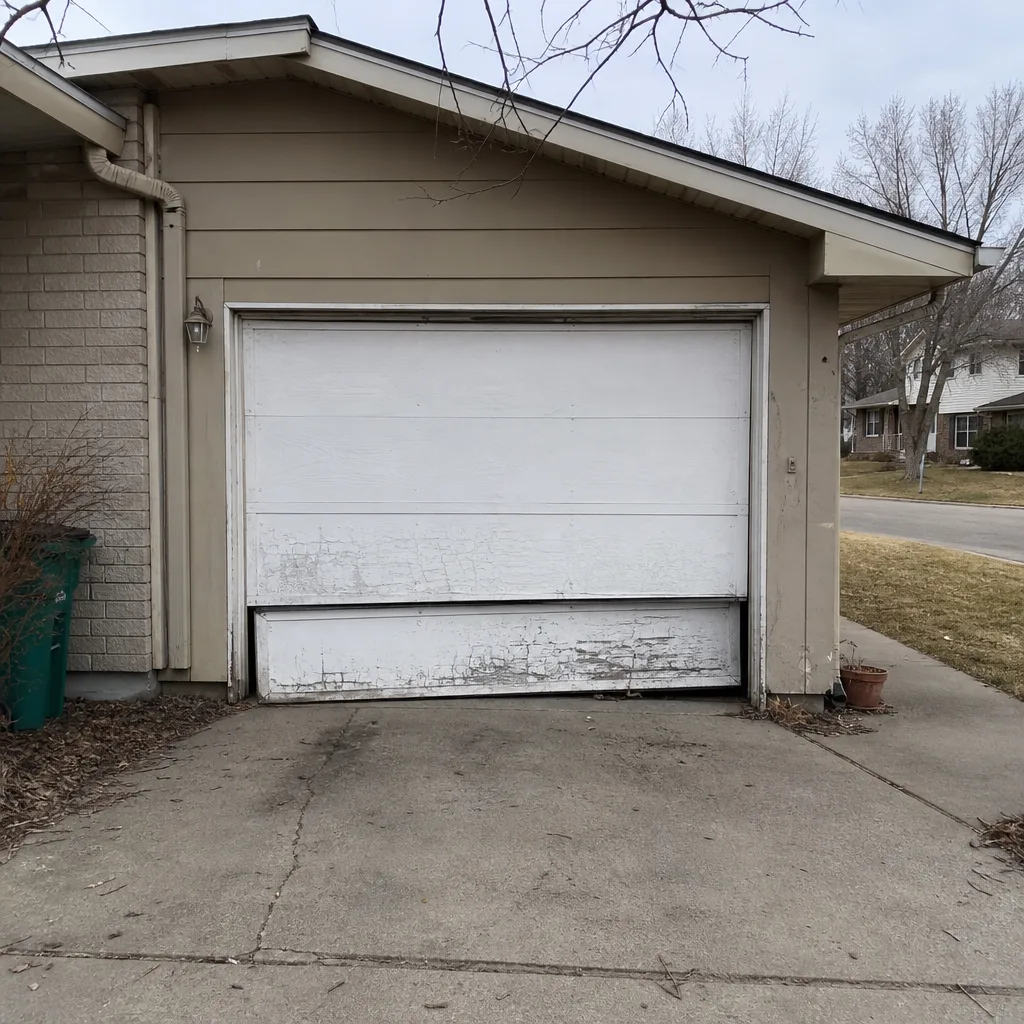 Before
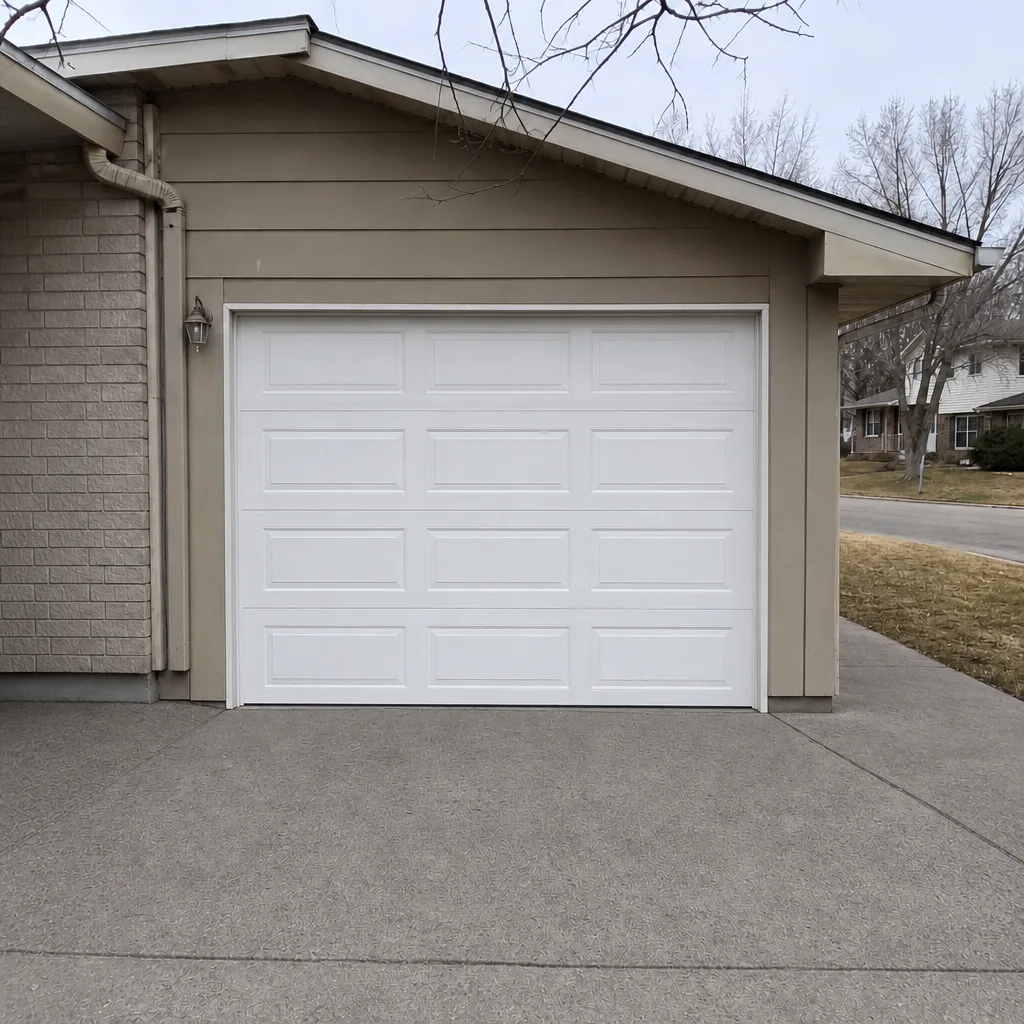 After
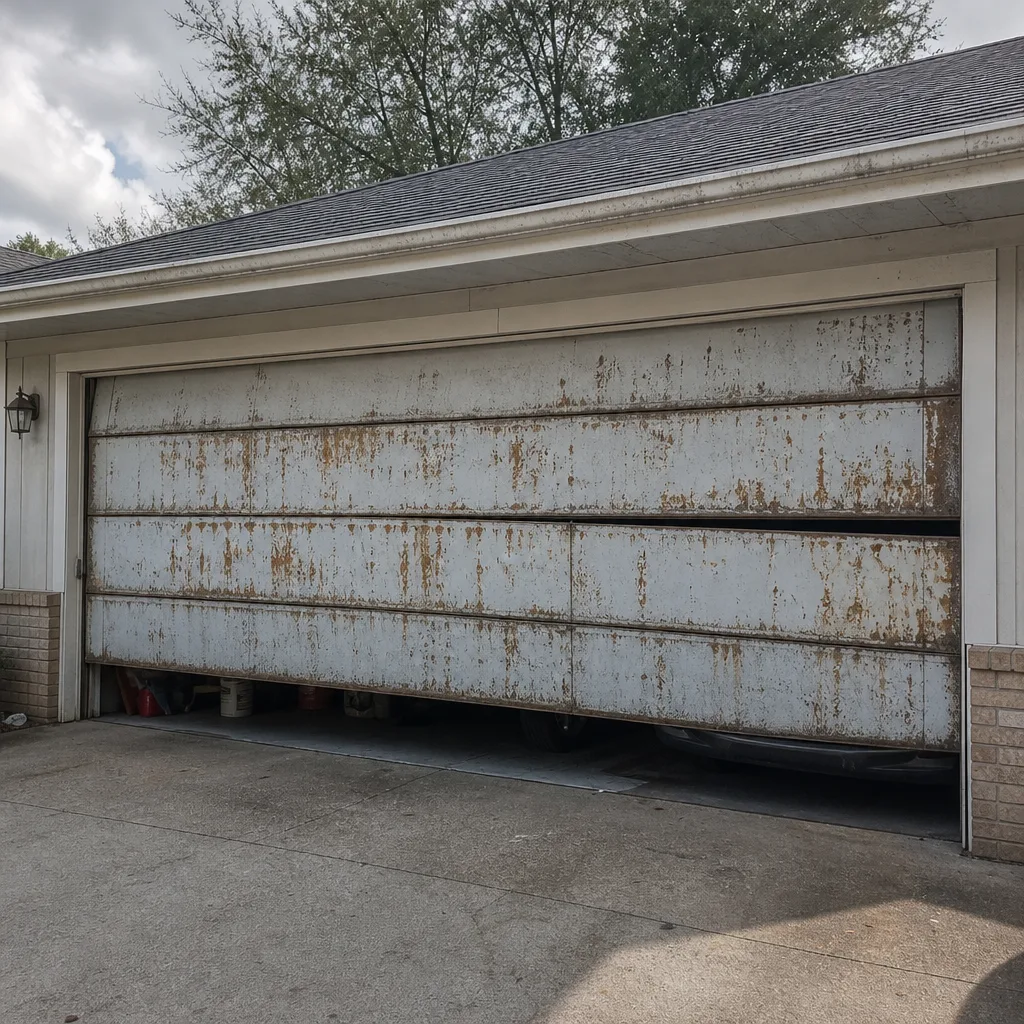 Before
 After
 Before
 After
Common Mistakes to Avoid
- Forcing a frozen door with the opener. This is the single most damaging winter mistake. Pull the manual release before you touch anything when the door is frozen.
- Pulling the release with the door open. The door can slam down. Only release with the door fully closed.
- Lifting a door with a suspected broken spring. It’s dangerously heavy and the spring is under extreme tension. Leave it and call a professional.
- Using a hammer instead of a rubber mallet on a frozen seal. A hammer cracks the seal and dents the panel; the mallet frees it without damage.
- Forgetting to secure the garage after disconnecting the opener. A disconnected door isn’t locked. Use the slide lock or add one.
- Running the opener with a manual lock engaged. It strips the opener gear or bends the door. Release the lock before you power the opener back on.
- Not knowing your opener model number. In an emergency, that number is the fastest path to the right advice. Write it down and keep it where you can find it.
When to Call a Professional
Call a professional any time the door is heavy or won’t hold position by hand, the spring looks broken or coils are separated, the door has jumped the track, or a frozen door won’t free with the correct thawing sequence. Also call if the opener runs but the door doesn’t move and re-engaging the trolley doesn’t fix it. These are the scenarios where a wrong move causes injury or turns a repair into a replacement. Manual release, thawing a frozen seal, and locking a disconnected door are homeowner tasks. Spring work, track work, and opener diagnosis are not. Eden Prairie Garage Door Repair Co offers free estimates in Eden Prairie and handles emergency service for failures that can’t wait. Call (844) 860-2380.
Frequently Asked Questions
Pull the manual release cord hanging from the opener trolley, then lift the door by hand. The handle is red or orange plastic, usually at about shoulder height below the rail. Only do this with the door fully closed, and never if the door feels heavy, which points to a broken spring.
The manual release cord hangs from the trolley on the rail, not from the motor housing. On a LiftMaster 8365 or 8550W it’s a red handle on a cord. Pull straight down firmly to disengage the door from the opener.
Because the opener has no power, and the door is still locked to the motor. The fix is the manual release: pull the cord at the trolley to disconnect the door, then lift it by hand. If the door still won’t move, the problem is mechanical, not electrical, and you should call for service.
It depends on the model. LiftMaster’s 8550W and Chamberlain’s B970 both have battery backup built in; most older LiftMaster 8365, Craftsman, and Wayne Dalton units don’t and may need an add-on. Check the model number on the opener housing, and remember that cold shortens real runtime in a Minnesota winter.
No. Pull the manual release first so the opener can’t fight the ice, then free the seal with a rubber mallet or warm water along the base. Forcing it with the opener is what strips gears and tears seals. If it won’t free after thawing, call us.
Engage the manual slide lock on the inside of the door, or add one if your door doesn’t have it. A disconnected door isn’t locked, and a multi-day outage leaves the garage open unless you secure it by hand. Call (844) 860-2380 if you’d like one installed.
The Bottom Line
Most garage door emergencies in Eden Prairie come down to knowing three things: where the manual release is, how to thaw a frozen seal without forcing the opener, and how to secure the door after you’ve disconnected it. The five items in a garage emergency kit solve the large majority of situations. Battery backup helps but has limits in cold. And when the door is heavy, the spring is suspect, or the track is bound, that’s when you call a specialist rather than a generalist. Emergency service exists because a door stuck open can’t wait until Monday. Call (844) 860-2380 for a free estimate.
Written by the team at Eden Prairie Garage Door Repair Co.