Last updated November 22, 2026
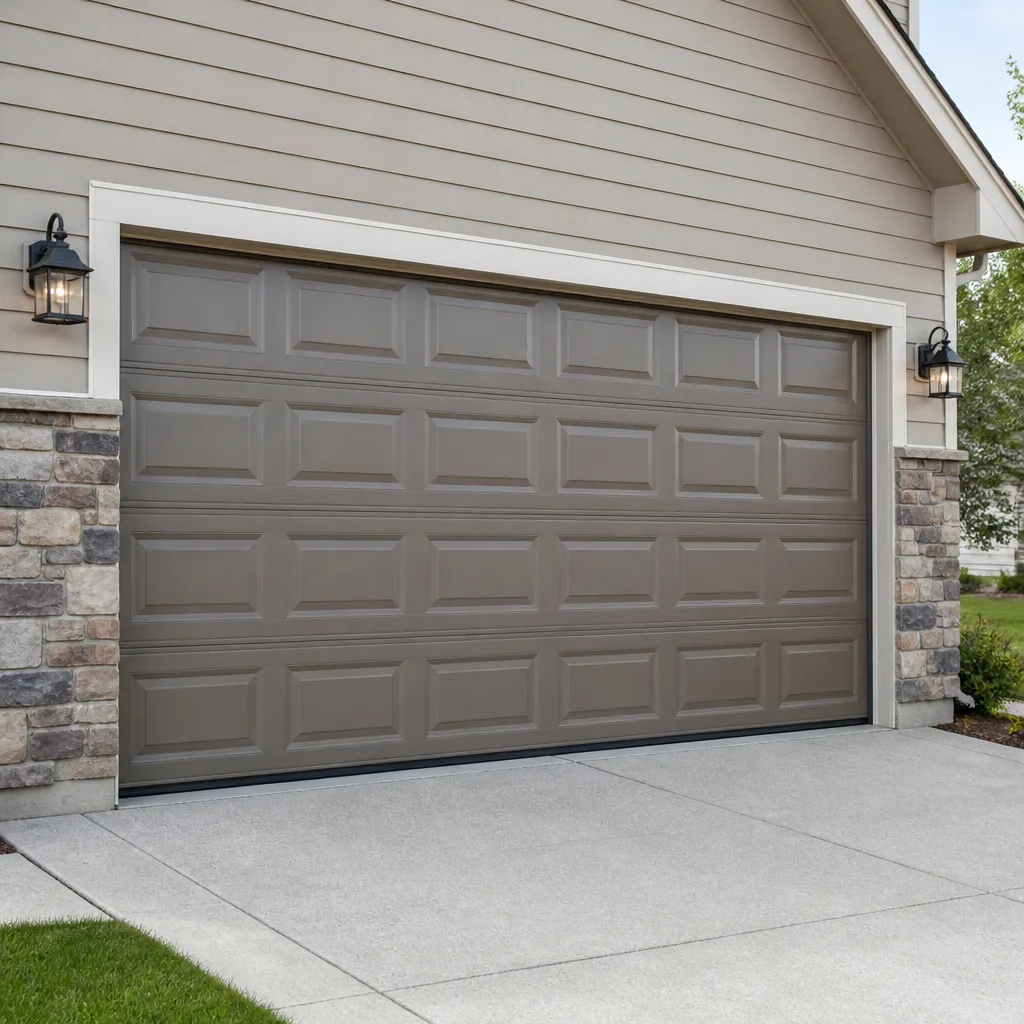 Raised-panel steel
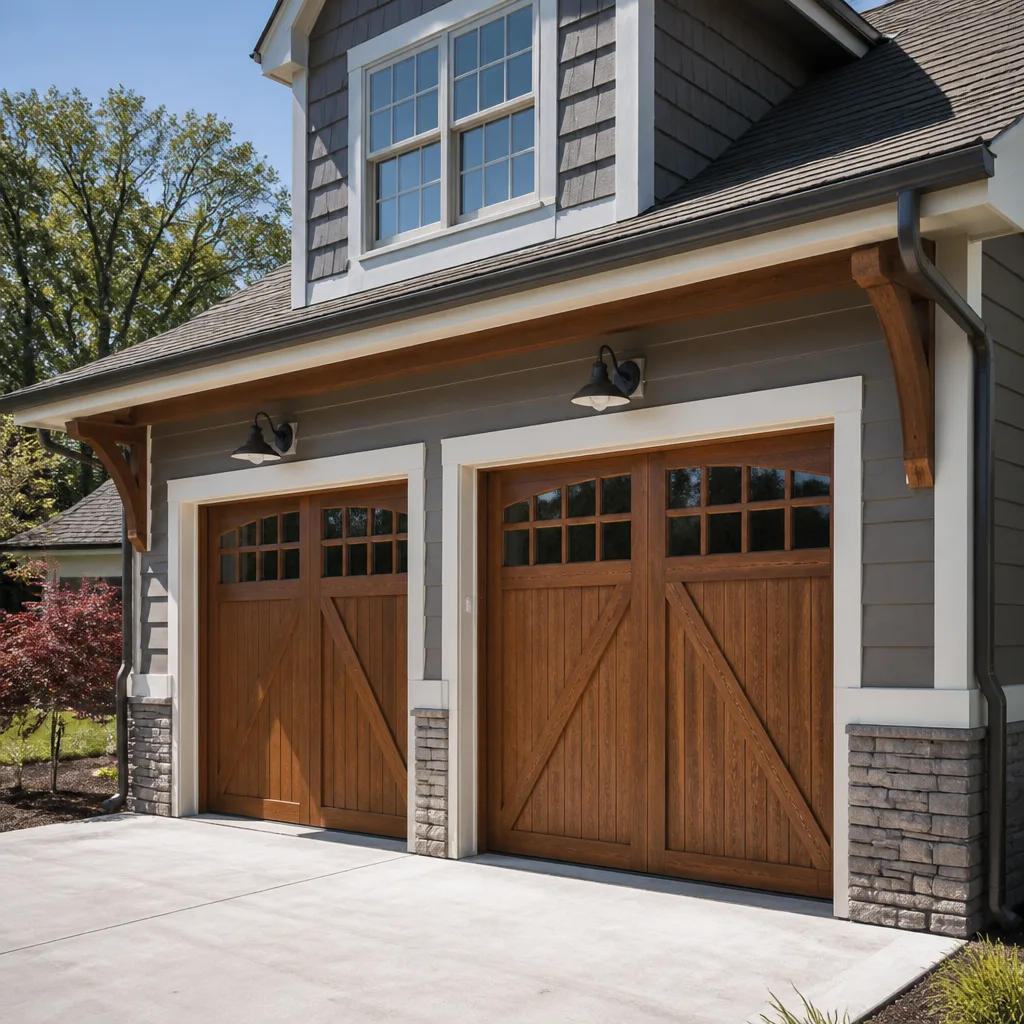 Carriage house
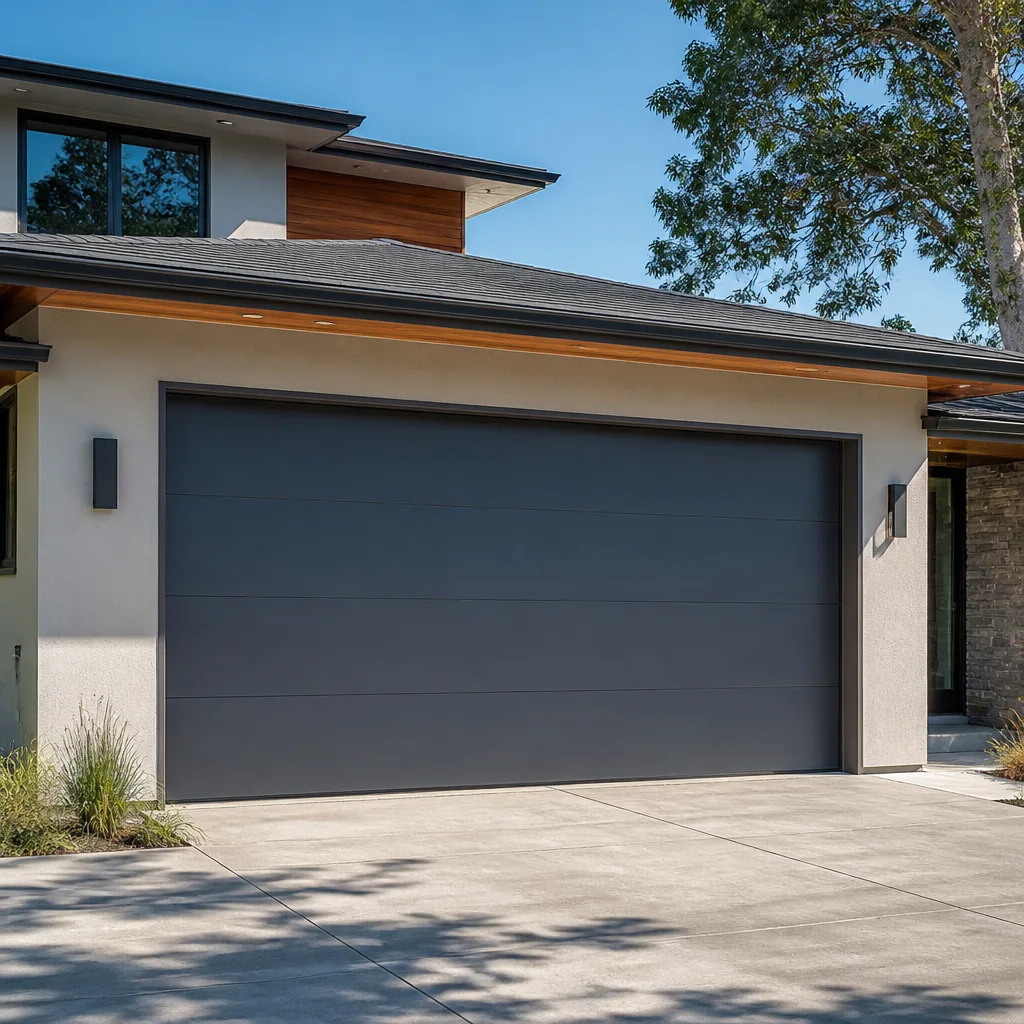 Modern flush
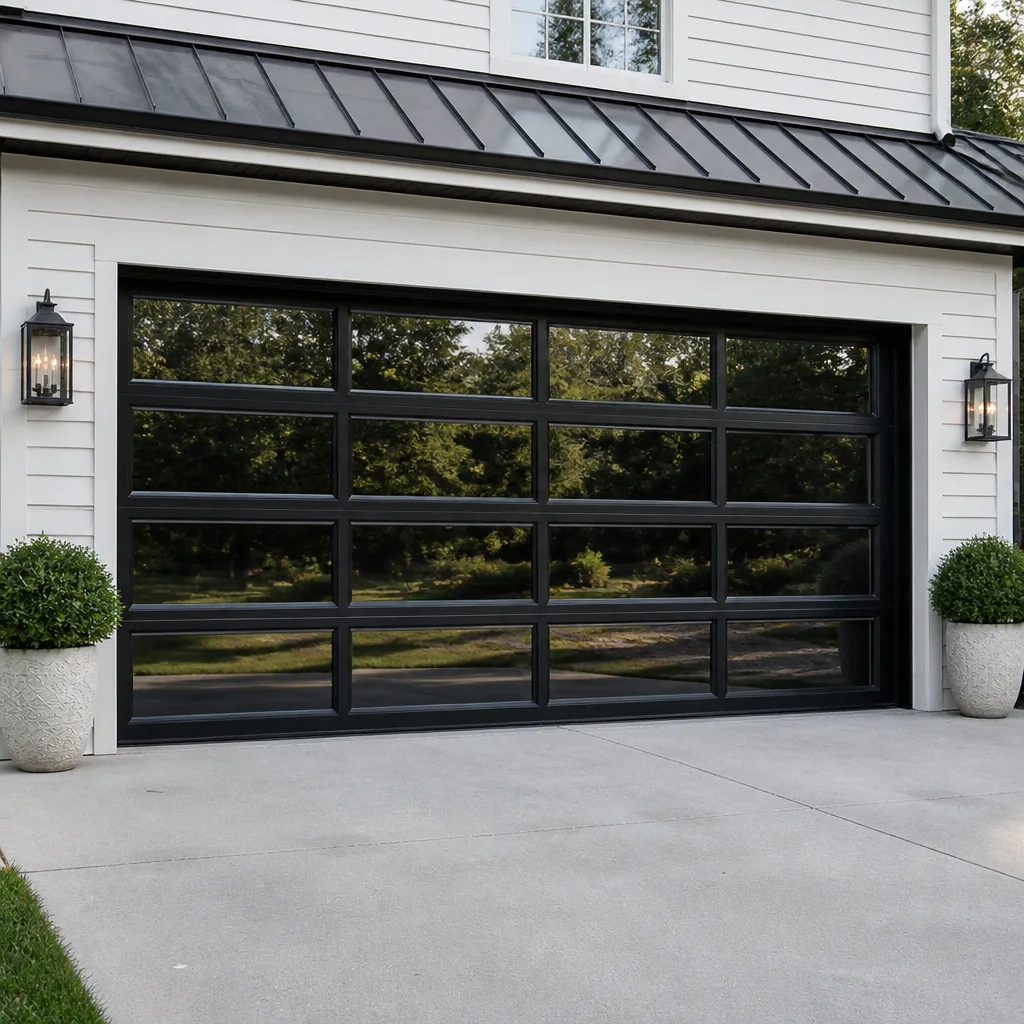 Full-view glass
 LiftMaster openers
 Chamberlain openers
Full 25-point door and opener safety check with every visit - springs, cables, rollers, tracks, and your LiftMaster or Chamberlain opener included
You get a price before we start. It does not change when the pro arrives.
Get your free estimateGarage Door Warning Signs: An Eden Prairie Homeowner’s Reference Guide
A garage door that hesitates for half a second before it moves isn’t “getting old.” It’s a torsion spring that’s lost enough tension to make your opener pull at well over its designed load, and that half-second pause is the sound of a component working past its limit. Most homeowners read that pause as normal and book a repair sometime later. The better move is figuring out whether “later” means next month or next Tuesday. This guide gives you a triage system we use on thousands of Eden Prairie doors: twelve symptoms, three urgency levels, and the specific part each sound or visual clue points to. By the end you’ll know which failures give you weeks to schedule and which ones get the door locked out today.
Quick Answer
Garage door warning signs fall into three buckets: green (schedule within 30 days), yellow (schedule this week), and red (stop using the door now). Green signs are cosmetic or slow-wearing – noisy rollers, a slightly stiff manual release. Yellow signs are springs losing tension, a fraying cable, or a binding track. Red signs are a visible coil gap in a torsion spring, a door that reverses without obstruction, or a cable off its drum – any of those mean the door stays closed and down until a specialist looks at it.
Styles & brands we work with
- Raised-panel steel
- Carriage house
- Modern flush
- Full-view glass
- LiftMaster openers
- Chamberlain openers
Table of Contents
- The Three-Tier Triage System
- Sounds Decoded: Snap, Grind, Pop, and Scrape
- Reading Your Torsion Springs: Gap vs. Rust vs. End Cone
- Worn Cable Drum vs. Worn Cable: Different Problems, Different Timelines
- Why Your Door Reverses When Nothing Is in the Way
- The Safety Devices You Should Test Monthly
- Eden Prairie Seasonal Warning Signs
- When to Call a Professional
The Three-Tier Triage System
Every warning sign tells you something about timing. The green-yellow-red system below is how we decide what to say when a homeowner describes a symptom over the phone. The color isn’t a judgment of how serious the problem is – it’s a clock. Green means a scheduled repair keeps the door working until we arrive. Red means the door stops being a door until it’s fixed.
Green: Schedule Within 30 Days
- Rollers squeaking or grinding on the track
- A single stiff hinge, or a hinge that pops as the door travels past it
- The manual release cord feels stiff or sticky
- Weather stripping curling at the bottom or sides
- Door panels rattling against each other during travel
Green signs are wear, not failure. They cost less to fix early because the worn part hasn’t yet dragged a neighboring part out of alignment. Squeaky rollers go on to wear the track; a stiff hinge goes on to stress a panel seam. Fixing the small thing stops the chain.
Yellow: Schedule This Week
- A spring that shows rust pitting along its length
- A cable with visible fraying near the drum or the anchor bracket
- A door that starts rising at an angle or feels heavier when you lift it by hand
- The opener straining audibly on the first inch of travel
- A track that has a visible bend or twist that the door has to push past
Yellow signs mean a component is degrading in a way that can accelerate. A fraying cable at the drum has already started to fail – the remaining strands are doing the work of the whole. A door that opens at an angle is telling you the two springs are no longer balanced, and the opener is compensating. This is the point where a scheduled visit prevents an emergency one.
Red: Stop Using the Door Now
- A torsion spring with a visible gap in the coil, or a broken end cone
- The door drops or slams on its own after lifting it a foot by hand
If you see either of these, don’t run the opener, don’t force the door, and don’t try to lift it with the opener’s travel to “see if it’s really broken.” A torsion spring under load stores enough energy to cause serious injury when it releases unexpectedly, and a door with a broken spring has no counterbalance at all – the full weight of the door is on the opener or on you. Call garage door spring repair and keep the door closed until a technician has it under control. A spring failure in the middle of a Minnesota January is exactly the scenario emergency service exists for: your car is inside, your security perimeter is open, and the door is stuck where it stopped.
Sounds Decoded: Snap, Grind, Pop, and Scrape
Your door makes four distinct sounds when something starts to fail, and each one points to a specific component. Learning to hear the difference is the fastest way to know what you’re dealing with before anyone arrives.
The Snap
A sharp, loud snap followed by the door going slack or dropping an inch is a torsion spring failing. The snap is the coil releasing its stored energy all at once. There’s no gradual version of this – either the spring is intact or it snapped, though it can fail overnight while the door sits closed and you find it in the morning. If you hear a snap and the door refuses to lift under power, that’s a red-tier symptom.
The Grind
A low, gritty grind during travel is almost always rollers. Steel rollers that have lost their bearings slide against the track instead of rolling through it, and the metal-on-metal contact produces that grinding note. The grind is also the sound of a badly worn track or a roller that’s slipped its stem. Left alone, grinding rollers wear grooves into the tracks, which turns a roller replacement into a track replacement.
The Pop
A single pop at a consistent point in the door’s travel is usually a hinge binding, a panel seam flexing, or a cable jumping a groove on the drum. It’s a positional sound – listen for where in the door’s rise or fall it happens. Front of the travel means an opener or drum problem; top of the travel means a hinge or track issue.
The Scrape
A scrape is a friction sound, and it usually means the door is rubbing against something: a misaligned track, a bent panel, or a jamb that’s shifted. In Eden Prairie, a scrape that appears after a hard frost is often a track that’s been nudged by ground movement or by the door shifting against ice at the threshold. It’s not an emergency by itself, but a scrape that goes on long enough will wear through paint and into the panel.
Reading Your Torsion Springs: Gap vs. Rust vs. End Cone
Standing in front of your garage opening and looking up at the spring assembly is the single most useful inspection a homeowner can do. It’s also the one place we most often hear “I looked at it and it seemed fine” when it wasn’t. Here’s what each visual clue actually means.
A Gap in the Coil
Look at the long spring running across the top of the door. If the coil – the wound part – has a visibly wider gap between two winds, or the coil has come apart into two separate sections, the spring has failed. There’s no tension left in the broken section. This is a red-tier symptom. The door has no counterbalance on that side of the shaft, and running the opener will push the remaining spring and the motor past their design limits.
Rust Pitting Along the Coil
Rust pitting is the earlier stage. Instead of an obvious gap, you see small pits or flakes along the spring’s surface, usually concentrated on one section. Rust doesn’t cause a spring to fail instantly, but it does reduce the spring’s lifespan – the coil is thinner where it’s pitted, so the remaining material carries more load. Pitting is a yellow-tier symptom. The spring will last longer than it would un-rusted, but not by much, and it’s cheap insurance to schedule it.
A Cracked or Loose End Cone
The end cone is the cone-shaped fitting that grips the spring onto the shaft. A cracked cone is a structural failure – it means the spring is no longer anchored correctly. This is an emergency: an end cone that lets go under load sends the spring and cone spinning on the shaft. Do not run the opener. Call for service and keep the door down.
For any of these, our spring repair technician checks both the springs and the end cones together, because a broken spring often tells you something about the cone that holds it. One spring’s price is one spring – if a matched pair is up, they usually get replaced together, which is roughly double a single spring’s cost. We’ll tell you which one you need before we start.
Worn Cable Drum vs. Worn Cable: Different Problems, Different Timelines
These two get confused constantly because they fail with similar symptoms – a door that binds or comes down unevenly. They’re not the same problem, and they don’t have the same timeline.
The Worn Cable
The cable is the braided steel line that runs from the bottom corner of the door, up the side, and onto the drum on the shaft. A worn cable shows fraying – individual strands loosened or broken, usually at the loop where it attaches to the bottom bracket, or near the drum where the cable winds. Fraying means the cable still carries load, but with fewer strands each. It can go weeks. It can also snap under a load it was handling fine yesterday. Treat a frayed cable as yellow-tier and get it replaced this week.
The Worn Cable Drum
The drum is the grooved spool at each end of the shaft that the cable winds onto. A worn drum shows as a groove cut into the drum’s surface, a cable that jumps its groove, or a drum that wobbles on the shaft. This one is easier to miss because the drum sits above eye level and the wear happens inside the groove where you can’t easily see it. A worn drum will let the cable jump off, and once it does, the door hangs by its tracks – the failure is sudden and the repair is bigger than a cable replacement. Yellow-tier: schedule this week, don’t push it to the end of the month.
In our experience, if a cable is frayed, the drum on that side has often started to wear too, and the reverse. That’s why we replace them together when the drum is already showing its groove wear. The alternative – replacing a cable that then jumps a worn drum in six weeks – is a more expensive repair done twice.
Why Your Door Reverses When Nothing Is in the Way
A door that reverses on its way down, then reverses again, then again, usually has a photo-eye problem – not a broken opener. The two small sensors mounted at the bottom of the door’s tracks on each side talk to each other with an invisible beam. When something interrupts that beam – or when the sensors drift out of alignment – the opener reads it as an obstruction and reverses. It’s working exactly as designed; the problem is the sensors aren’t sending a clean signal.
Why Frost Heave Causes This in Eden Prairie
The photo-eye brackets are mounted low, near the floor, and the beam runs across the threshold. In a Minnesota winter, frost heave moves the ground under the threshold, and that movement shifts the bracket the eye is mounted on. The beam that was aimed cleanly across the opening in October no longer hits its target in January. The opener doesn’t know the difference between a drift and an obstruction – it only knows the beam is broken, so it reverses.
Checking It Yourself
This is safe to check, not to repair:
- Look at each sensor’s indicator light – most modern units, including LiftMaster and Chamberlain, have one that stays steady green when aligned.
- Wipe both sensor lenses clean. A thin coat of salt residue or dust scatters the beam.
- Check the brackets for visible play – if either eye wiggles when you touch it, the alignment is likely off.
- If the indicators aren’t steady, or you can see the bracket has shifted, that’s the sensor or the mounting, not the opener.
If the indicators are steady and the door still reverses, the issue is more likely the opener’s travel limits or a worn gear, and that’s a yellow-tier opener problem for a specialist. Our opener repair technician diagnoses by brand logic, not guesswork – we know LiftMaster, Chamberlain, Genie, Clopay, Amarr, Wayne Dalton, Craftsman, and Raynor systems well enough to know where each one is prone to fail before we start looking.
The Safety Devices You Should Test Monthly
Garage doors have two safety systems that exist to keep people out from under a closing door. Both can fail quietly. Testing them is quick, and it’s the one monthly habit that makes the biggest difference to a household with small kids or pets.
The Photo-Eye Test
- Stand outside the path of the door with the door fully open.
- Start the door closing with the wall control.
- Pass your hand, a broom handle, or a shoe through the beam – not into the doorway – while the door is moving.
- The door should reverse. If it doesn’t stop and reverse immediately, stop using the door and call us.
The Balance Test
- Close the door.
- Pull the manual release to disconnect the opener. You’ll hear a click as it releases.
- Lift the door halfway by hand and let go.
- The door should hold its position. If it falls, the springs are out of balance and the door is running on the opener’s muscle instead of its own.
These are the two tests we’d ask any homeowner to run before us. The photo-eye is one we can usually fix by realigning the bracket and checking the wiring – but a photo-eye that won’t reverse is one of the rare cases where the door should stay closed until we arrive. A door that fails the balance test is almost always a spring problem.
Eden Prairie Seasonal Warning Signs
Garage doors in Eden Prairie see a wider temperature range than most of the country, and that range produces its own warning signs. A sound or a stiffness in January that we’d call green in July is worth calling about now.
Winter
Cold is hard on torsion springs – the metal contracts slightly and the spring has less give. A door that starts stiffening in a cold snap is telling you the springs are already near the end of their load range, and a full snap in the cold is more likely than a snap in July. Frozen ground at the threshold is the other winter sign: if the door closes stiffly or the bottom seal catches, check for ice that’s built up under the seal. In Eden Prairie the connection between ground movement and photo-eye drift is the one we solve most in February.
Spring and Fall
These are the transition seasons when the ground thaws and re-freezes, and track alignment can shift along with it. If a door starts scraping or grinding after a thaw, look at the track where it meets the floor first.
Summer
Heat expands the tracks and rolls against the opening, which can bind a door that runs fine the rest of the year. It’s also the busiest season for outdoor stored items inside the garage, which is when off-track doors happen most – a bike or a box catches the door’s bottom edge as it comes down.
Our advice for any of these: book the inspection that month rather than waiting for the symptom to grow. Seasonal shifts are when alignment drifts, rollers wear faster, and springs get stressed – it’s cheap to check before a failure, and more expensive to repair after.
Common Mistakes to Avoid
- Running the opener on a broken spring. It feels like it’s working – the motor runs, the door moves a little – so the homeowner learns to “help” it with the wall button. The motor is pulling the full weight of the door and it will fail next, adding an opener repair to the spring repair.
- Lifting a door by hand when it won’t open. A door with a failed spring weighs far more than it should, and forcing it up can send a panel or a bracket loose. If the door won’t open, call rather than lift.
- Greasing the wrong parts. A common instinct is to oil the torsion springs and the drums. Both are oil-free assemblies – grease there traps grit, and grit accelerates cable wear on the drum.
- Adjusting the opener’s travel limits to force a door past a track binding. The travel limit is the opener’s way of stopping the door at the right height. If you extend it to force a door through a bend in the track, you’re working against the door’s own geometry, and eventually a panel cracks.
- Replacing one spring when both are matched. A pair of torsion springs is manufactured as a matched set, wound to share the load evenly. If one has snapped, the other is close to the same age and has taken the full load since the failure. Replace the pair.
- Assuming a reversing door means a bad opener. Nearly all the photo-eye drift cases we see are an alignment or debris issue, not the opener itself. Buying a new opener for a reversing door is the most expensive version of fixing a sensor.
- Ignoring a scrape that only happens in winter. Scrapes are easy to write off as “just the cold.” Ice at the threshold means water is getting under the door, which is a much longer repair than a seal replacement if it goes on for a few winters.
See the difference
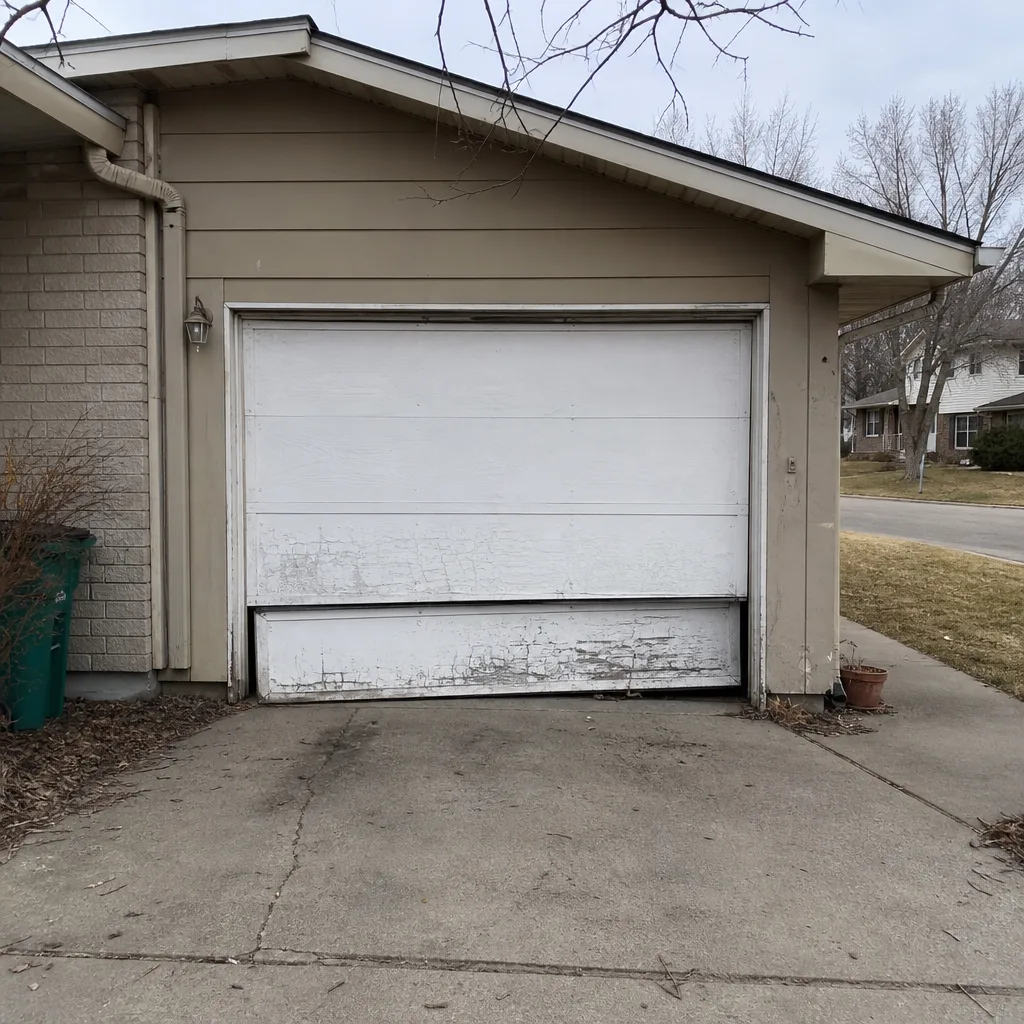 Before
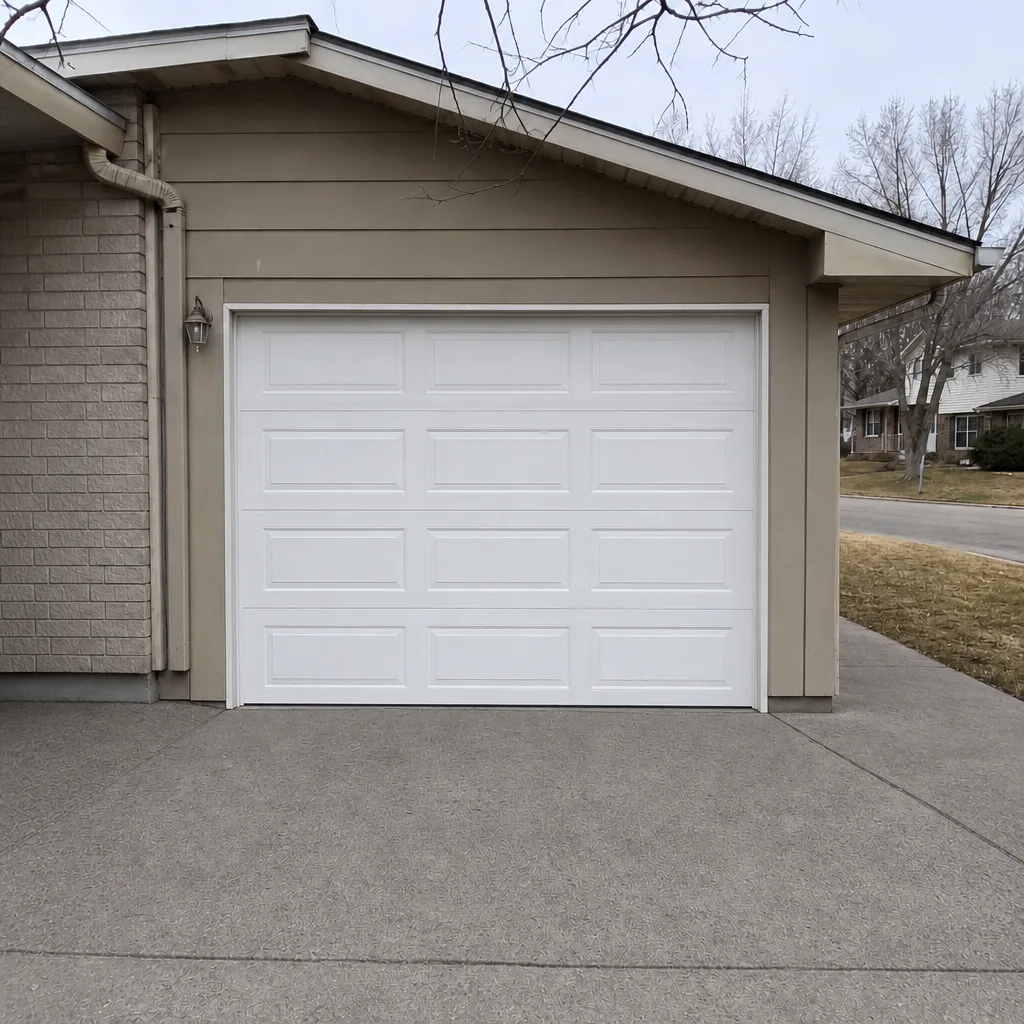 After
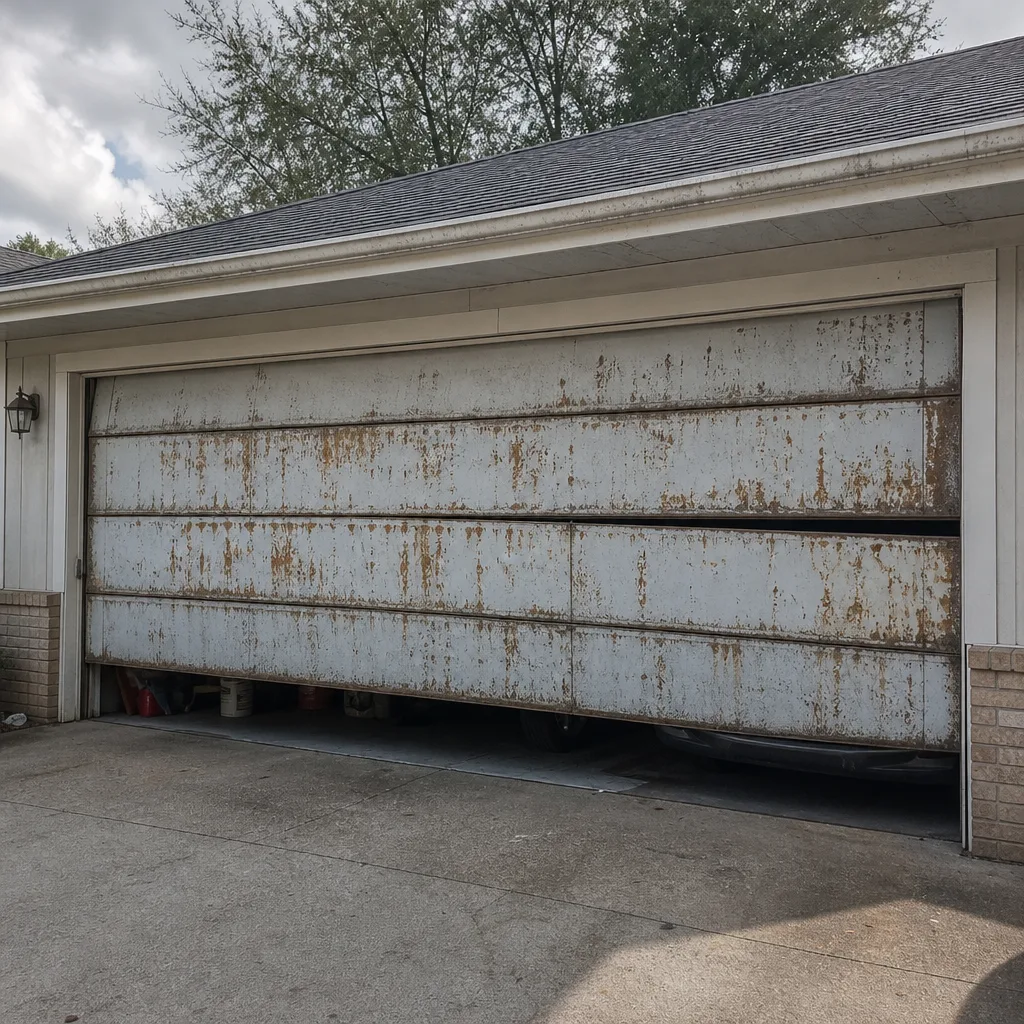 Before
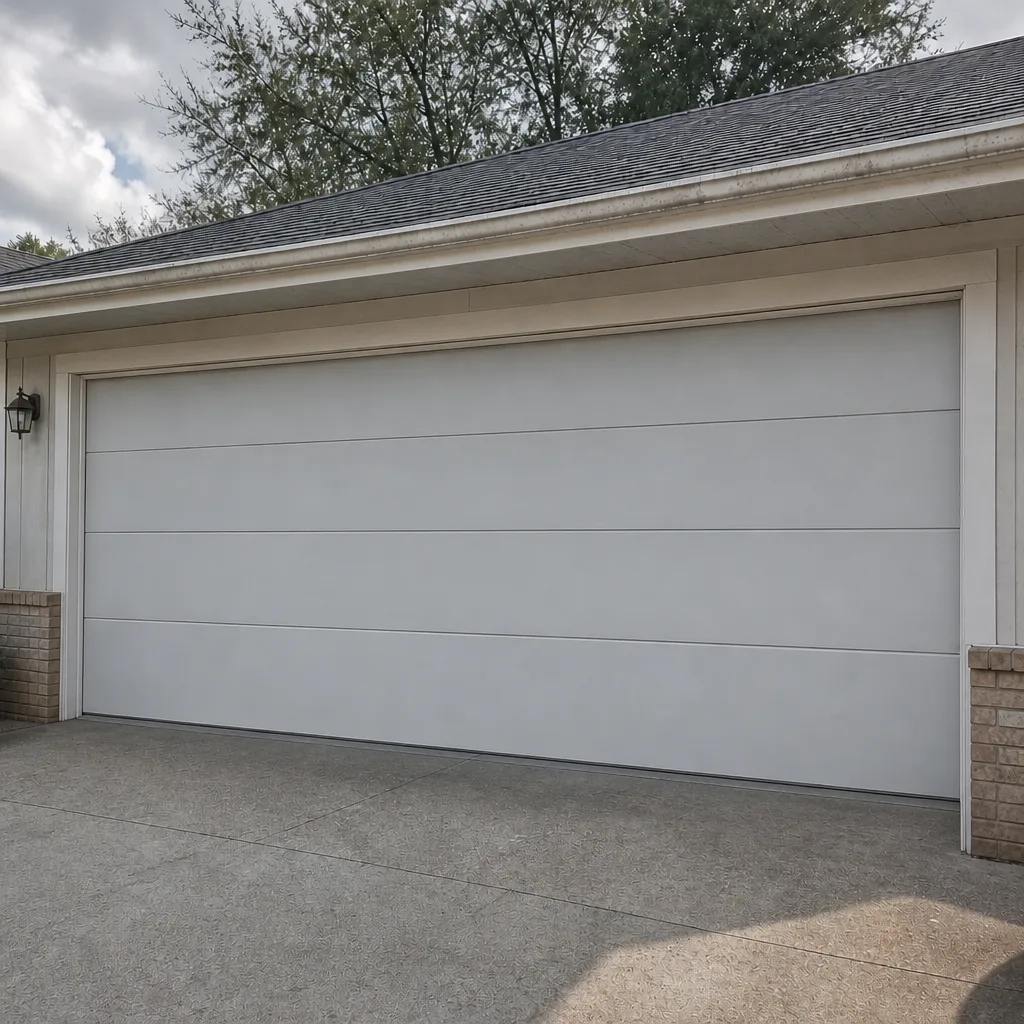 After
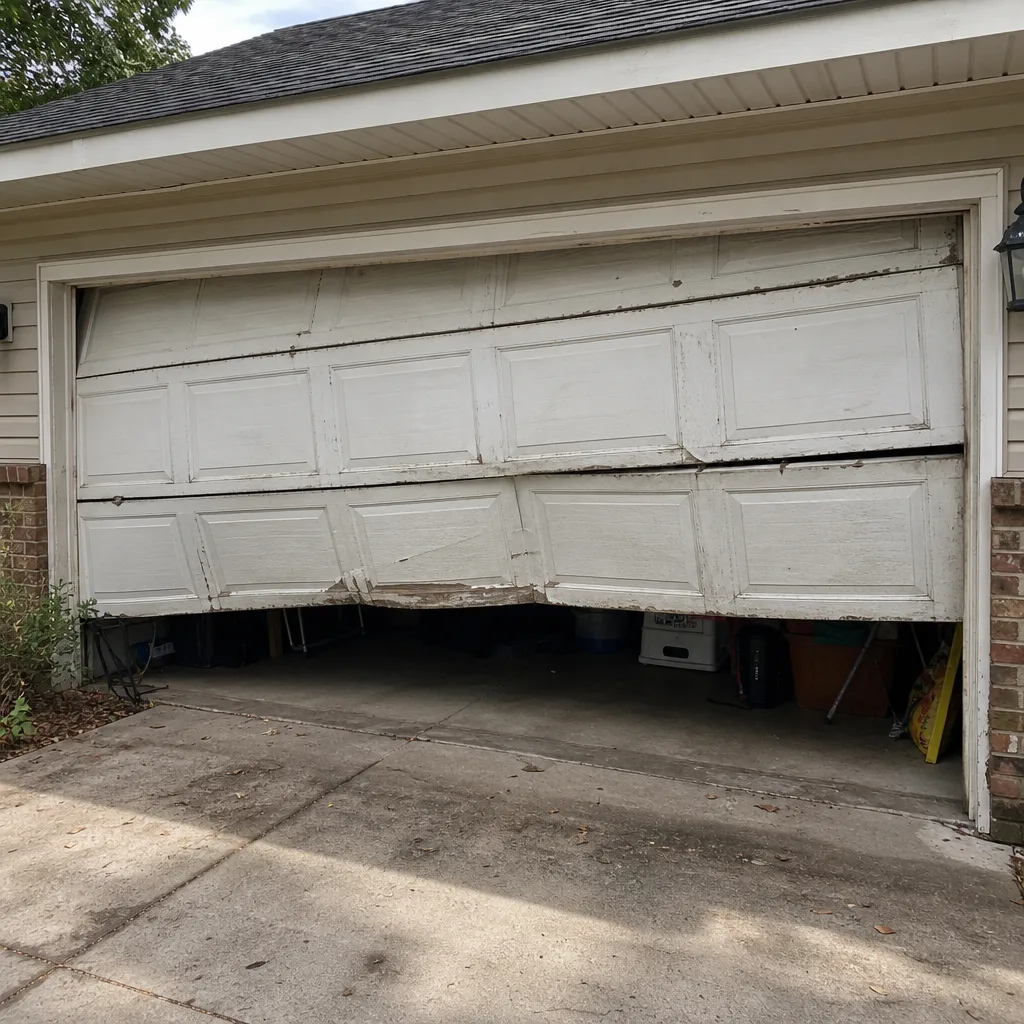 Before
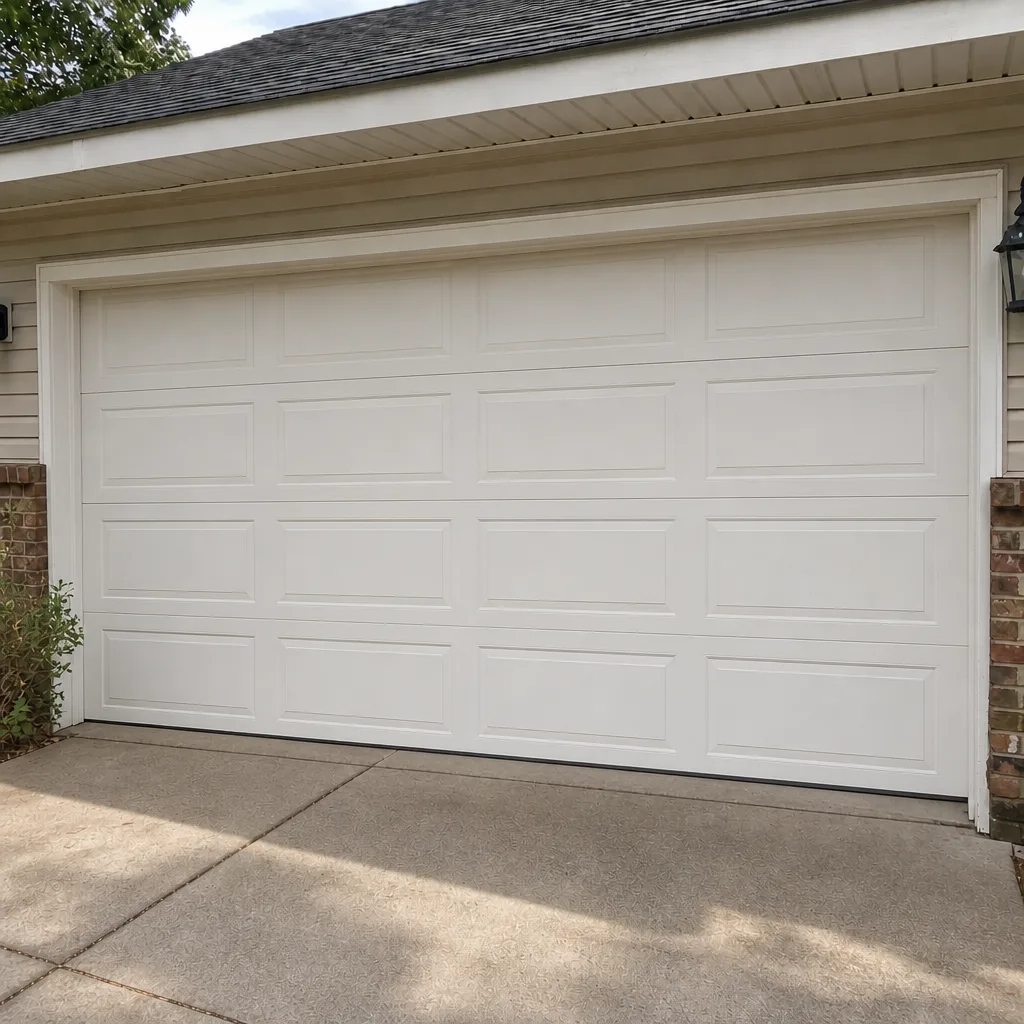 After
When to Call a Professional
Call a professional the moment you see any red-tier symptom, or the moment a yellow-tier symptom has been the same for a week. In our experience, the homeowners who end up with the biggest repairs are the ones who booked a call after the symptom changed from yellow to red – and in Eden Prairie the window between those two states can be as short as one cold snap. A torsion spring, a frayed cable, or a door that reverses on its own has the potential to cause serious injury when it fails under load, so any repair that involves those components should be done by a technician who works on them every week. The door’s counterbalance is the part we’d never want a homeowner handling themselves. Eden Prairie Garage Door Repair Co offers free estimates in Eden Prairie – call (844) 860-2380.
Frequently Asked Questions
The first warning signs are sounds and stiffness: a grind during travel that wasn’t there last month, a door that hesitates for a half-second before lifting, a pop at the same point in the door’s rise. None of those is an emergency by itself, but any of them means a component is working harder than it should. Book a repair call when they start rather than when you’ve gotten used to them.
Look at the coil. A spring with a visible gap between its winds, or a coil that has come apart into two separate sections, is broken. If the door feels very heavy when you lift it by hand, or the opener labors and stops, the spring is likely broken. Once you’ve seen a gap, stop using the door and call a specialist. A spring failure is the one warning sign that doesn’t wait for a scheduled appointment. Call (844) 860-2380 and we’ll get a technician out to look at it.
Most reversing doors are a photo-eye problem, not an opener failure. The two sensors at the bottom of the tracks talk to each other with a beam, and if the beam is broken or the sensors are out of alignment, the opener reverses. In Eden Prairie, the most common cause we find is frost heave shifting the sensor bracket through the winter. Wipe the lenses, check the indicator lights, and if they aren’t steady green, call for a sensor alignment.
No. A torsion spring under load stores enough energy to cause serious injury, and a door with a broken spring has no counterbalance, so the full weight of the door has to be handled safely before the spring can even be removed. Spring repair is one of the most dangerous garage door repairs, and it’s a job for a specialist every time. Our technicians handle spring repair in-house – we don’t subcontract it out.
The cable is the line you see running up the side of the door from the bottom bracket – a worn cable shows fraying or broken strands. The drum is the grooved spool at the top that the cable winds onto – a worn drum shows a groove cut into its surface or a cable jumping its track. They look similar in symptoms because both cause the door to bind, but a worn drum can cause a sudden full drop when the cable jumps off, so it’s the one to catch early. If you’re not sure which you’re looking at, call us for a look.
First, pull the manual release – that disconnects the opener and lets you test whether the door itself moves. If the door moves freely by hand but won’t close under power, the opener is the issue and it’s a repair call. If the door won’t move at all, or you hear it strain, stop using it and call. A door stuck open overnight is a security problem in Eden Prairie, so we offer emergency service for doors that can’t wait for a scheduled visit.
The Bottom Line
Warning signs break into two very different situations: those that give you weeks, and those that give you hours. Grinds, pops, and squeaks are the first kind, and they’re cheap if you book them early. A visible spring gap, a crack in the end cone, a cable off its drum, or a door that reverses with nothing in the way are the second kind, and they’re the reason we keep emergency service on the schedule. Read your springs once a month. Run the balance and photo-eye tests. Learn the four sounds. A door that hesitates before lifting isn’t getting old – it’s telling you exactly which part is about to go. If you’re not sure which tier you’re in, our Eden Prairie Garage Door Repair Co team offers free estimates and honest answers, and our garage door repair work spans spring, cable, and track faults, one specialist at a time. Call (844) 860-2380 for a free estimate on your warning sign.
Written by the team at Eden Prairie Garage Door Repair Co.