Last updated November 22, 2026
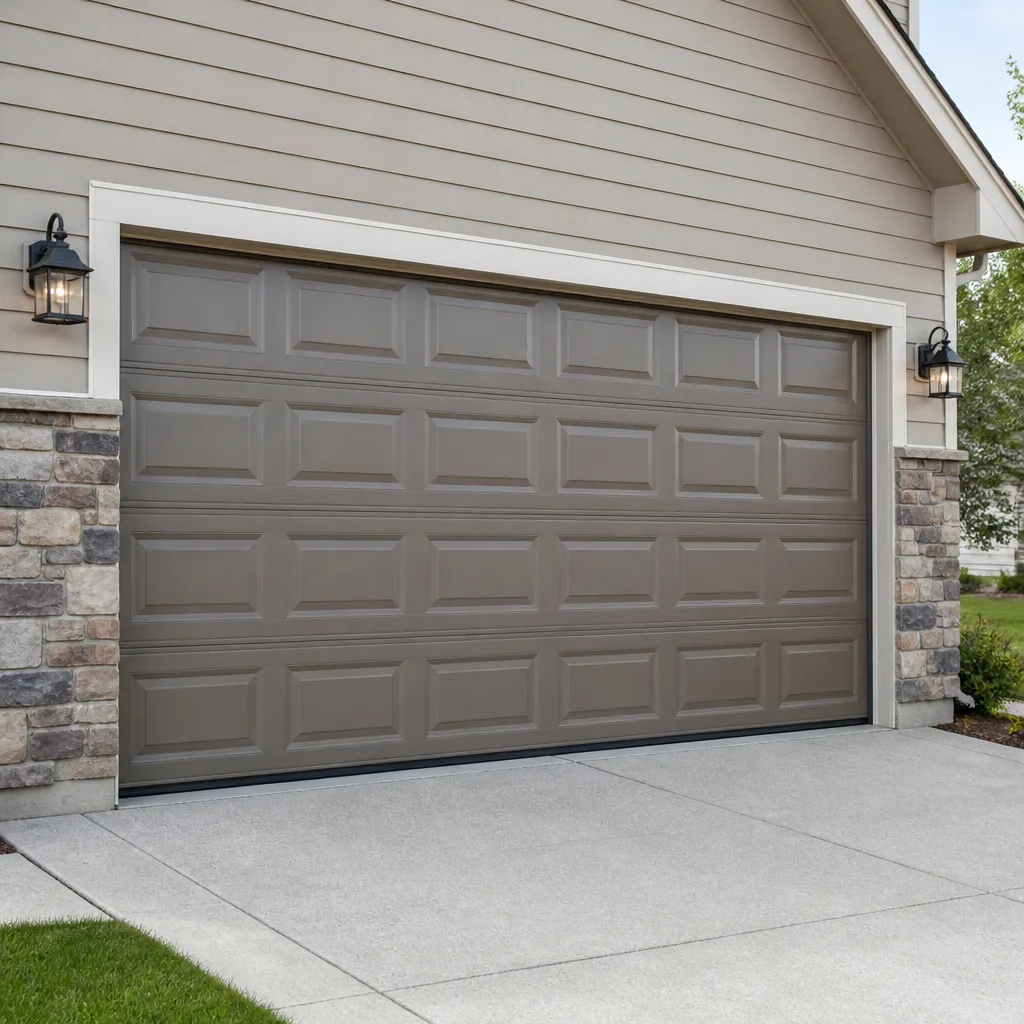 Raised-panel steel
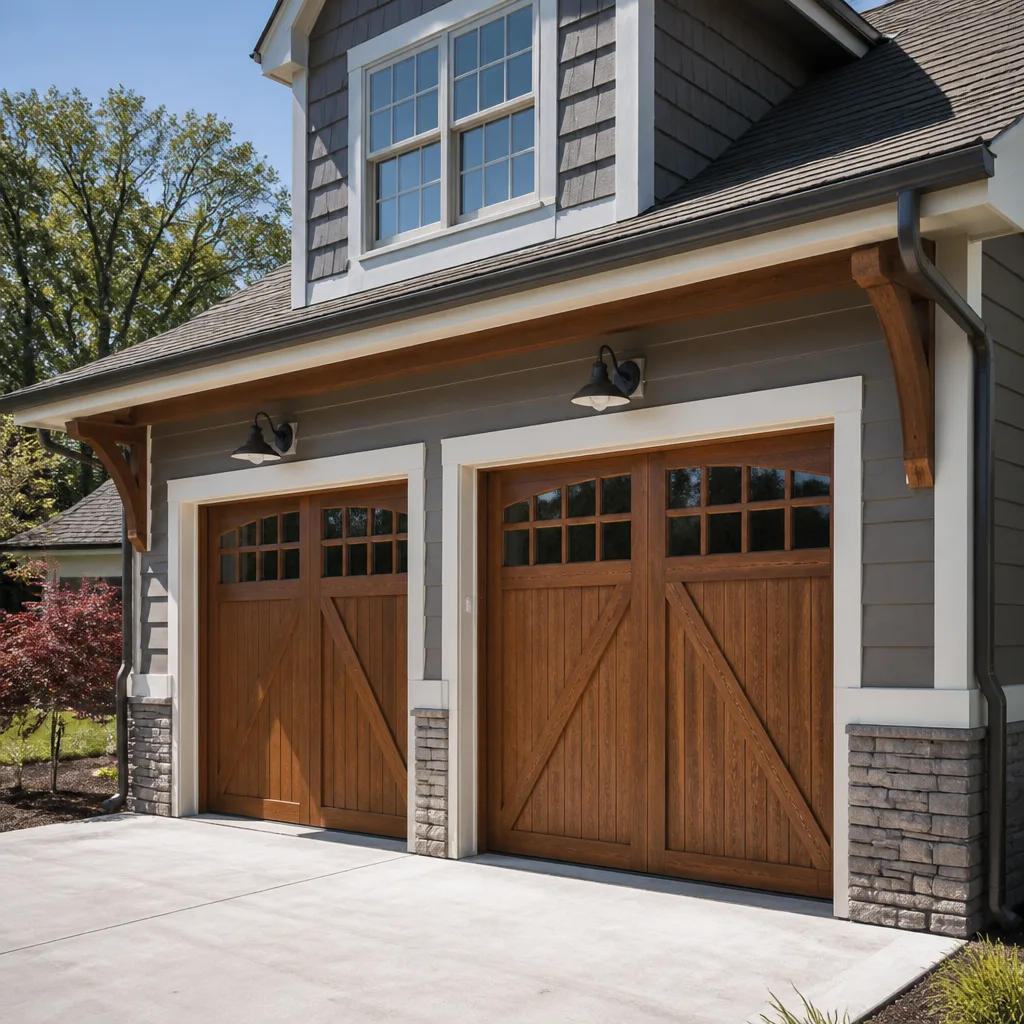 Carriage house
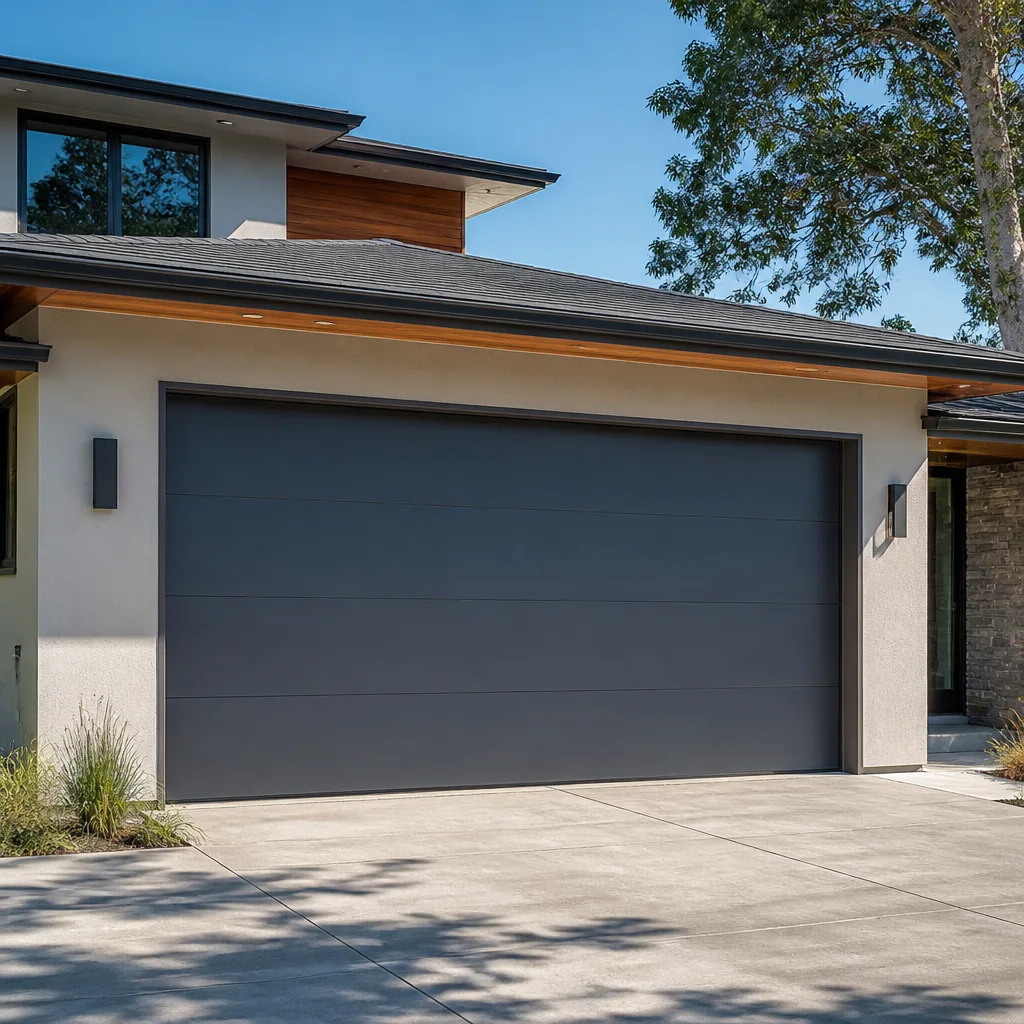 Modern flush
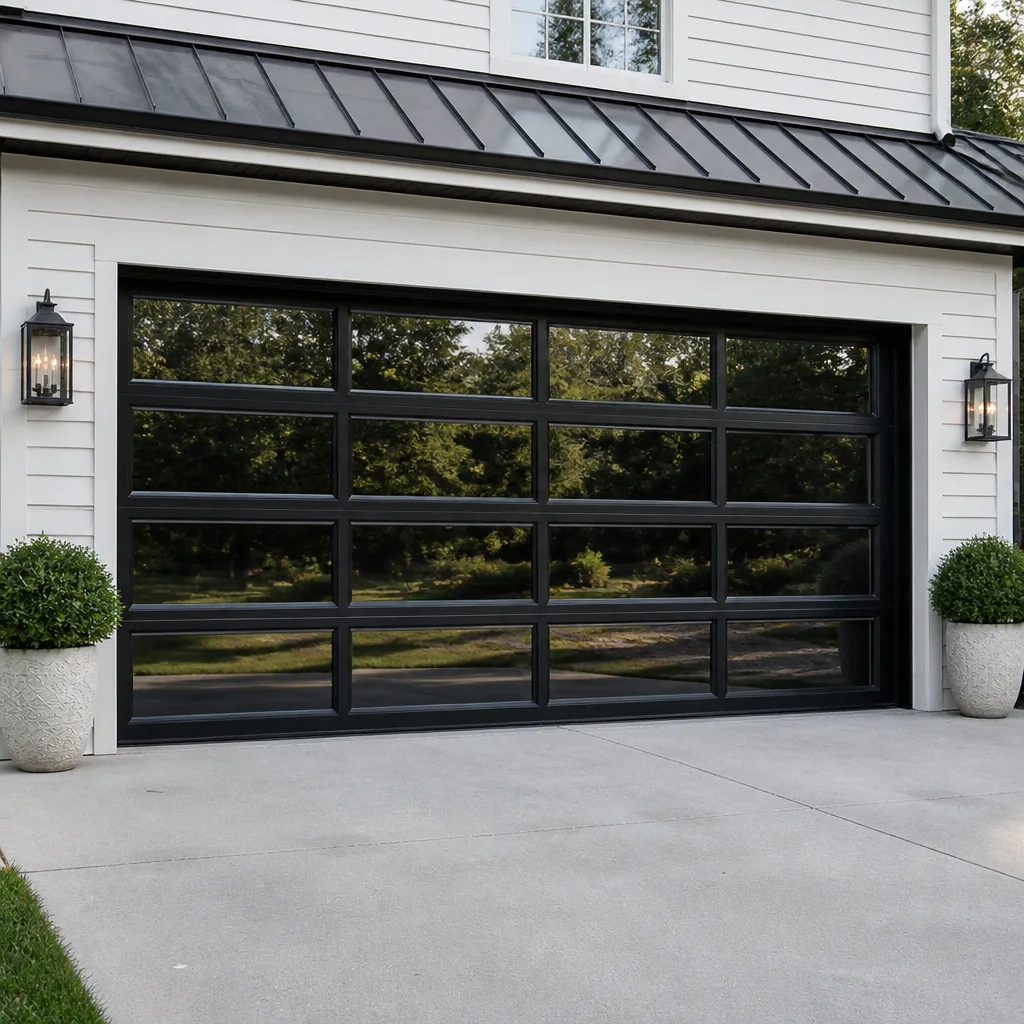 Full-view glass
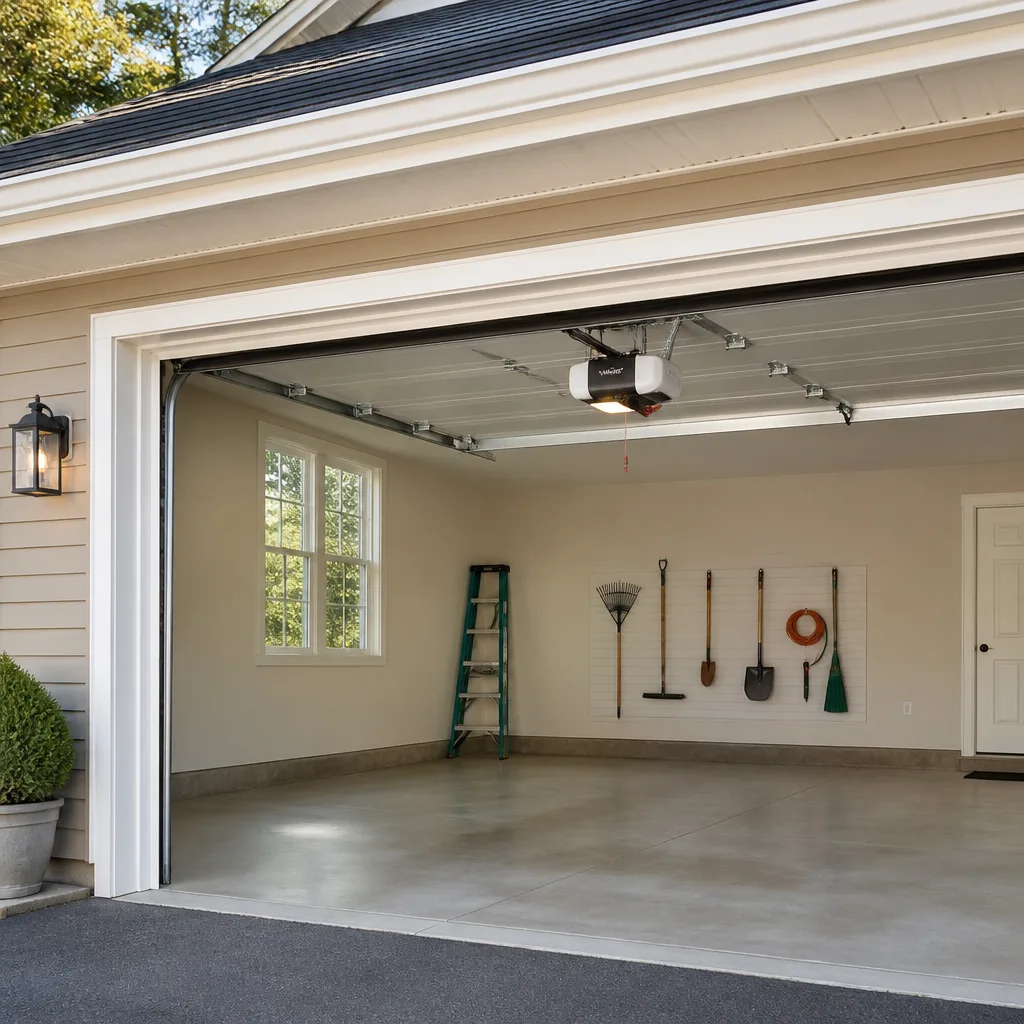 LiftMaster openers
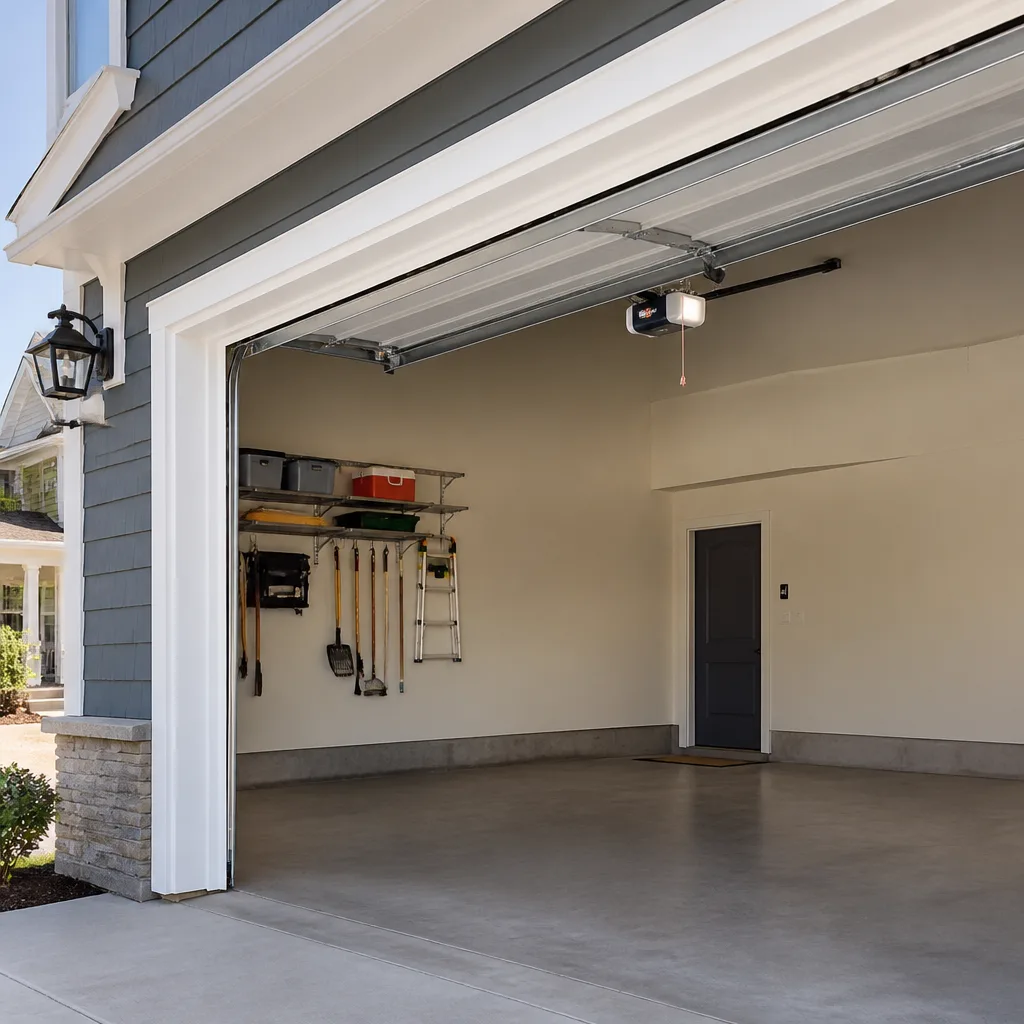 Chamberlain openers
Full 25-point door and opener safety check with every visit - springs, cables, rollers, tracks, and your LiftMaster or Chamberlain opener included
You get a price before we start. It does not change when the pro arrives.
Get your free estimateDIY vs Professional Garage Door: The Eden Prairie Homeowner’s Decision Guide
A wound torsion spring holds a lot of stored energy, and the video that claims to walk you through replacing one carries no liability if you get hurt following it. That imbalance is the whole conversation. The DIY-or-pro question is rarely about whether you’re handy. It’s about whether a given task forgives a mistake or punishes it. Some garage door jobs are genuinely safe for a homeowner with a Saturday and the right parts. Others can maim you. This guide breaks down ten common jobs by actual injury risk, shows where DIY saves money and where it costs more, and explains how a Minnesota homeowner’s choices ripple into insurance and liability. By the end you’ll know exactly which tasks to keep and which to hand off here in Eden Prairie.
Quick Answer
Most garage door maintenance is safe for an Eden Prairie homeowner to handle: weatherstripping, photo-eye alignment, remote programming, and cleaning tracks. Anything that touches a torsion spring, the cables, or the door’s balance is professional-only, because those parts store and release dangerous force. Opener electrical work sits in the middle and depends on your comfort with wiring. When in doubt, treat the task as one for a trained technician.
Styles & brands we work with
- Raised-panel steel
- Carriage house
- Modern flush
- Full-view glass
- LiftMaster openers
- Chamberlain openers
Table of Contents
- The Task Matrix: 10 Jobs Rated by Injury Risk
- What DIY-Safe Actually Looks Like in Eden Prairie
- The Spring Tools Nobody Should Improvise
- DIY vs Professional: The Honest Cost Comparison
- Minnesota Liability and Your Homeowner’s Insurance
- Minnesota Climate and the Parts That Fail First
- Why Brand Matters: Diagnostic Logic by Make
- Planning a New Door: When Installation Leaves the DIY List
The Task Matrix: 10 Jobs Rated by Injury Risk
Difficulty and danger get conflated all the time. A task can be easy to understand and still be the most dangerous thing in your garage. This matrix rates ten common garage door jobs by injury risk, not by how hard they are to learn. We’ve watched homeowners breeze through some of these and get badly hurt on others.
| Task | Rating | Why |
|---|---|---|
| 1. Replacing weatherstripping along the floor and sides | DIY-safe | Low force, no springs involved, simple hand tools |
| 2. Realigning photo-eye safety sensors | DIY-safe | Nothing stores energy, adjustment only |
| 3. Reprogramming a remote or keypad | DIY-safe | Purely electronic, follows the opener manual |
| 4. Using the manual release to open a door by hand | DIY-safe | Basic safety knowledge every homeowner should have |
| 5. Cleaning and lubricating tracks and rollers | DIY-safe | Maintenance with no adjustment of load-bearing parts |
| 6. Tightening loose hinge and bracket bolts | DIY-with-caution | Over-tightening can strip or distort; know the torque |
| 7. Replacing a bottom seal or small dent repair | DIY-with-caution | Door must be held safely; watch pinch points |
| 8. Replacing the opener motor or wall control wiring | DIY-with-caution | Low-voltage and line-voltage wiring mixed; know what you’re touching |
| 9. Adjusting or replacing torsion springs | Professional-only | High stored torque; a slip can break bones or worse |
| 10. Replacing cables, drums, or re-leveling a door | Professional-only | Cables are under extreme tension; sudden failure is violent |
Notice the pattern. The tasks rated professional-only are the ones where the part is holding back a lot of energy and letting it go wrong happens fast. Everything else, with a little care, is within reach of a confident homeowner. If you’d rather not touch anything on the list, that’s a fine decision too.
What DIY-Safe Actually Looks Like for Eden Prairie Homeowners
DIY-safe doesn’t mean “easy.” It means a mistake results in a door that still works a little worse, not a trip to the emergency room. Four jobs fit that definition cleanly, and they’re the ones worth learning if you want to save money and understand your door.
- Weatherstripping replacement. The rubber seal at the bottom of the door and the strips along the sides take a beating through Minnesota winters. When the seal cracks, cold air and snowmelt find their way in. A new bottom seal slides into the retainer channel and side strips pull off and press back on. No springs involved, no adjustment to tension, no risk beyond scraped knuckles.
- Photo-eye realignment. The two small sensors near the floor bounce an infrared beam across the opening. If the door reverses for no reason or refuses to close, one of them has usually been bumped out of line. Loosen the wing nut, point it back at its partner, watch for the indicator light to go solid, and re-tighten. That’s the whole repair in most cases.
- Manual release operation. Every homeowner should know where the red release cord is and how to use it during a power outage. Pull the cord to disconnect the door from the opener, then lift the door by hand. If the door is heavy or won’t stay up, the springs or balance are off and you should stop and call a technician.
- Remote and keypad reprogramming. Whether you’re working with a LiftMaster or a Chamberlain system, the process follows the manual: press the learn button, then the remote button, wait for the click or blink. Replacing a lost remote or changing a code is a five-minute task and a good time to remove a former housemate or contractor’s access.
None of those jobs involve winding a spring, lifting a door onto a track, or putting your hands near a loaded cable. That’s the line. Stay on the safe side of it and you’ll handle a good chunk of routine upkeep on your Eden Prairie home yourself.
The Spring Tools Nobody Should Improvise
Torsion spring work requires two winding bars made of hardened steel sized to fit the winding cones on your specific spring. A matched pair from a garage door supplier runs a modest amount. The bars must engage fully and squarely. People substitute screwdrivers, punch tools, or whatever rod they can find, and that substitution is where most serious injuries come from, not the concept of the repair itself.
Beyond the bars, the job involves:
- Winding bars sized to the cone – wrong diameter means a loose engagement and a bar that can slip out under load
- C-clamps or locking pliers to hold the door in place on the track while the springs are off
- A winding chart or the manufacturer’s specification for the number of quarter-turns your spring size requires – tune by feel and you’ll over-wind a spring that then fails early
- Knowledge of the spring’s wire gauge and inside diameter, which determine both the replacement part and the correct number of turns
Here’s the thing most tutorials skip: a torsion spring holds a substantial amount of stored torque when it’s under load. If a winding bar slips out of the cone while you’re turning, the spring unwinds instantly and the bar can swing with real force. That’s why we treat torsion spring work as one of the most dangerous repairs in the trade and handle it in-house rather than farming it out. Our technicians work on these springs for a living, and we still respect the tooling every time.
When a spring breaks in your Eden Prairie garage, the safe move is to leave the door down, keep cars out from under it, and call for garage door spring repair. A trained technician can size the spring, match the pair, and set the correct number of turns without improvising a single tool.
DIY vs Professional: The Honest Cost Comparison
The cost question cuts both ways. Some DIY repairs save real money with no risk of escalation. Others look cheap until a botched attempt turns a straightforward fix into a bigger job. Here’s where each side genuinely wins.
Where DIY actually saves money
- Panel dent repair on a steel door. A cosmetic dent that doesn’t break the panel skin can sometimes be worked back into shape with a mallet and a wood block. No springs, no balance, no risk beyond a bad finish.
- Bottom seal replacement. The seal is an inexpensive part. Doing it yourself saves the cost of a service call for a job that takes minutes with the door held safely.
- Weatherstripping and sensor alignment. Both are low-cost parts and low-risk tasks. Doing them yourself is a fair call.
- Remote programming and keypad setup. Free to do yourself, and the manual walks you through it.
Where a botched DIY costs more than the pro repair
- Torsion spring work. If a spring isn’t matched to the door weight or is wound to the wrong count, it can fail early, and an injury changes the math entirely.
- Cable and drum replacement. Getting the cable back on the drum wrong can drop the door crooked and bend a track or crack a panel. Replacing a bent panel typically costs more than the original cable repair would have.
- Opener electrical errors. Miswiring a new opener can damage the control board. That repair adds up quickly compared to having the wiring done correctly the first time.
- Balance adjustment. A door that’s out of balance and running on an overworked opener will burn through the opener motor sooner, and that replacement is a bigger bill than a tune-up.
The pattern to keep in mind: if the DIY attempt goes wrong and the resulting fix is bigger than the original job, that task belongs with a technician. Springs, cables, and motor wiring all fit that description. If you’re not sure which side of the line a task falls on, a free estimate from a specialist will tell you without any commitment. For the routine repair side, our garage door repair page covers what a service call looks like.
Minnesota Liability and Your Homeowner’s Insurance
Here’s the part most DIY guides never mention. Garage door work touches your homeowner’s policy in a way that’s easy to overlook, and it runs in two directions.
The first direction is damage. If a self-installed part fails and the door drops onto a car, a bicycle, or the door itself, your homeowner’s policy may cover the resulting damage, but the claim interacts with your deductible and your claims history. A repair you did yourself isn’t necessarily excluded, but you open the conversation with your insurer on harder footing than if the work had been done by a trained technician.
The second direction is liability to other people. A garage door that closes on someone can cause serious injury. If that door was recently installed or adjusted by the homeowner and some part was incorrect, the question of who is responsible becomes complicated. In Minnesota, a properly licensed contractor typically carries their own liability coverage for the work they do, which is one reason the trade is regulated. Hiring a technician keeps the responsibility on the professional where it belongs, and lets you point clearly at a contractor and a policy. Before any significant repair or a new install, it’s worth a short call to your insurance agent to ask how the work affects your coverage. Many agents will explain it in plain terms.
If you’re planning new door work and want that protection in place, our garage door opener repair specialists can walk you through the options and quote the job in writing before anything gets ordered.
Minnesota Climate and the Parts That Fail First
An Eden Prairie garage door works harder than its southern counterpart, and the parts that fatigue are predictable. Our climate runs from subzero winter nights to humid summer afternoons, and each cycle of expansion and contraction loosens the door’s seals, stiffens its grease, and tests its springs.
The parts that fail first in a Twin Cities door tend to be:
- The bottom weather seal. Snow, ice, and meltwater cycle against it all winter. It cracks, hardens, and stops sealing. This is the single most common erosion point on an Eden Prairie door.
- The springs. A spring counts every open and close as one cycle, and cold weather makes the metal less forgiving. When spring demand peaks, they break more often.
- Metal hinges and rollers. Road salt tracked in on tires corrodes the hinge plates that hold the door’s panels together.
- The opener drive gear. A stiff, cold door is a heavier load on the opener motor, and the drive gear and travel limits wear from fighting it.
What this means for the DIY decision is simple. The parts that fail most in Eden Prairie are the ones worth checking first. A worn bottom seal is a call for a new seal, not a new door. A spring that’s slow to lift the door in January is worth a balance check before it gives out. And a door that reverses for no reason in the cold is usually a sensor that needs adjusting, a task that’s on the safe list. Catching these little things before they compound is most of what keeps a door going through a Minnesota winter.
Why Brand Matters: Diagnostic Logic by Make
A technician who works on nothing but garage doors diagnoses by brand. A Craftsman opener and a LiftMaster opener share some lineage, but their safety reversals and travel-limit adjustments behave differently. A Raynor door has different track geometry and panel tolerances than a Clopay. Knowing those differences saves time on the visit and prevents a wrong-part guess.
We work on eight major brands day to day: LiftMaster, Chamberlain, Genie, Clopay, Amarr, Wayne Dalton, Craftsman, and Raynor. That familiarity shows up in small ways. Which opener’s learn button is hidden where. Which door’s panel is a known suspect in the cold. Which spring size a given door model actually wants. For a homeowner planning to order parts for a DIY task, knowing the exact model number and brand of both the door and the opener matters. The label on the opener and the tag on the door’s end stile give you that information.
When a door won’t close and the cause isn’t obvious, a specialist reads the brand and the symptom together and shortens the path to the fix. Our technicians have up to 10 years of experience with these systems, and we keep every tool and every part focused on this one trade. Call one team for diagnosis, repair, and installation by returning to Eden Prairie Garage Door Repair Co any time.
Planning a New Door: When Installation Leaves the DIY List
Full door installation is a professional job for almost every homeowner. The reason isn’t just the springs. A new door arrives as a system of panels, tracks, torsion hardware, and an opener that must all be square and correctly tensioned together. A door installed a little out of true will wear its rollers unevenly, bind on the track, and shorten the life of the opener. That’s a set of problems that costs more to fix than getting it right the first time.
Where a homeowner can stay involved is the part before installation: measuring the opening and choosing the door. A few things worth getting right on that step:
- Measure the rough opening in three places for width and height, because Eden Prairie openings aren’t always perfectly square.
- Note the ceiling height and the space above the door so the track and opener have room to work.
- Confirm the door’s brand and model so the factory parts match a replacement or a repair down the line.
- Ask about the door’s weight, because the springs are matched to that weight and can’t be guessed.
For a new door, we don’t promise same-day service because the work is measured, ordered, and scheduled. What we do promise is a written price before any work starts, so there are no surprises once the door arrives. If you’re weighing a repair against a replacement, a free measure and quote will give you a clear answer either way.
Common Mistakes to Avoid
- Improvising spring tools. A screwdriver or punch in place of a winding bar is the most dangerous shortcut in the trade. The right bars cost little and engage properly.
- Winding a spring to the wrong number of turns. Tuning by feel instead of the specification over-tensions the spring and shortens its life.
- Over-tightening hinge bolts. A hinge bolt that’s cranked down too hard can crack the door panel or distort the hinge. Tight enough to hold, not tighter.
- Ignoring a reversing door. In Eden Prairie, a door that reverses for no reason is often a misaligned photo-eye, which is a five-minute adjustment. Let it stand and the door keeps reversing on you.
- Skipping the balance check. If the door feels heavy or won’t stay up when you pull the manual release, the springs are off. Running the opener hard in that state wears the motor out early.
- Assuming a generalist will handle springs. Many general handymen decline or outsource spring work. Confirm whoever you call actually performs it in-house before booking.
- Skipping the insurance conversation. Before a significant repair or install, a quick call to your agent about coverage is worth the minutes.
See the difference
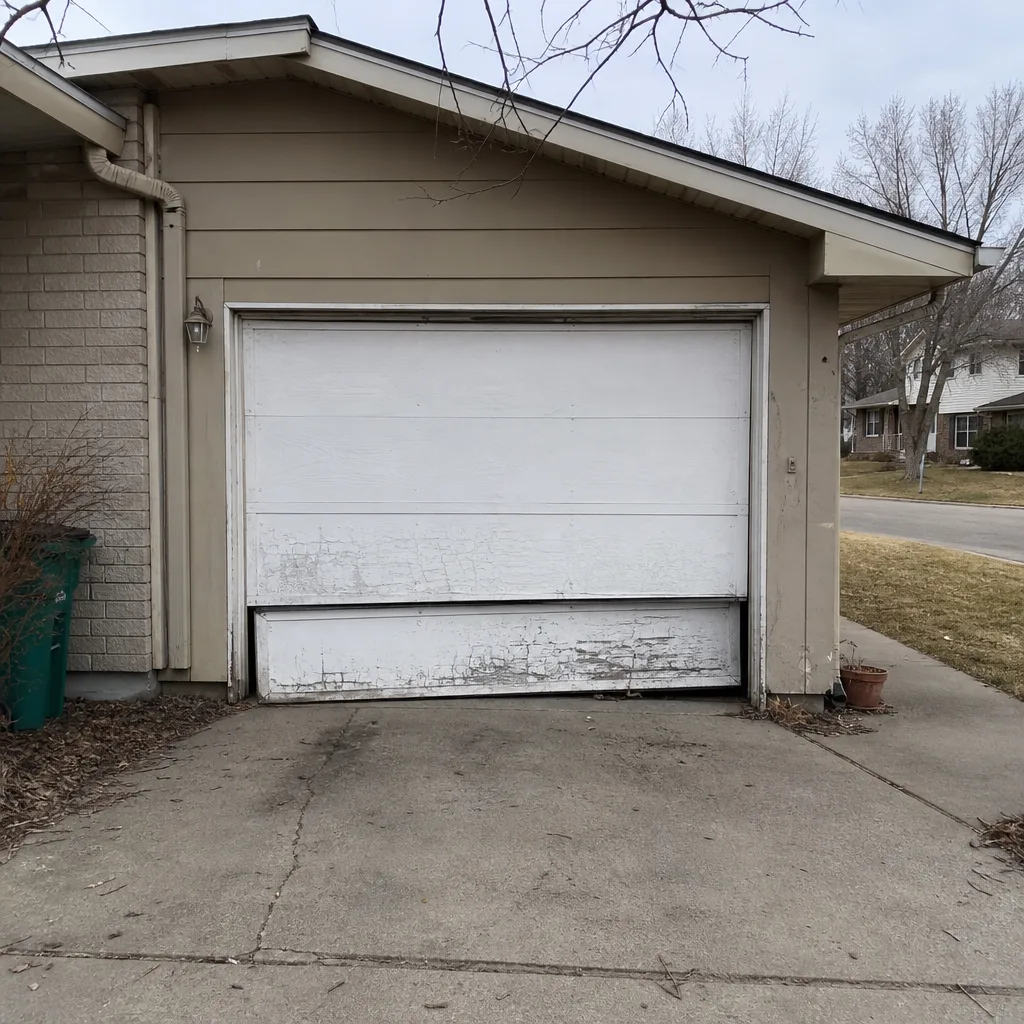 Before
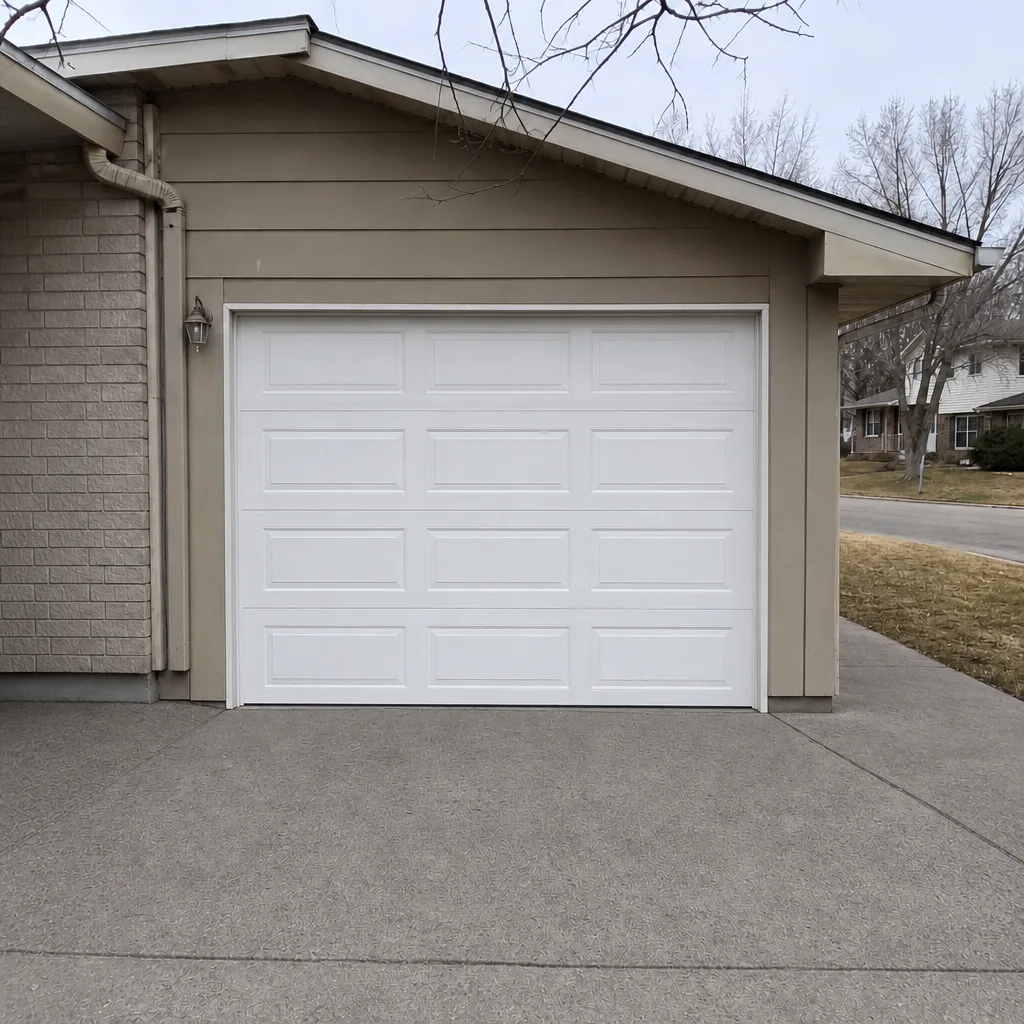 After
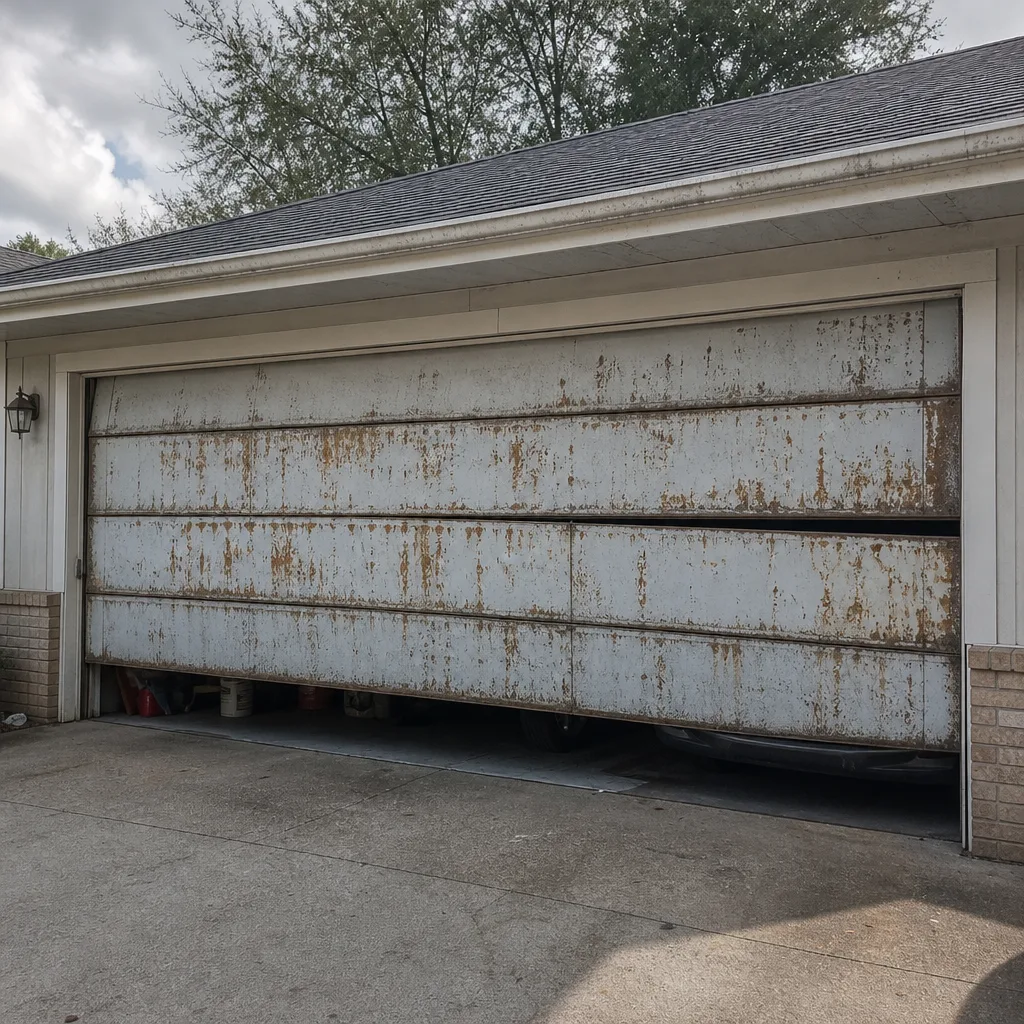 Before
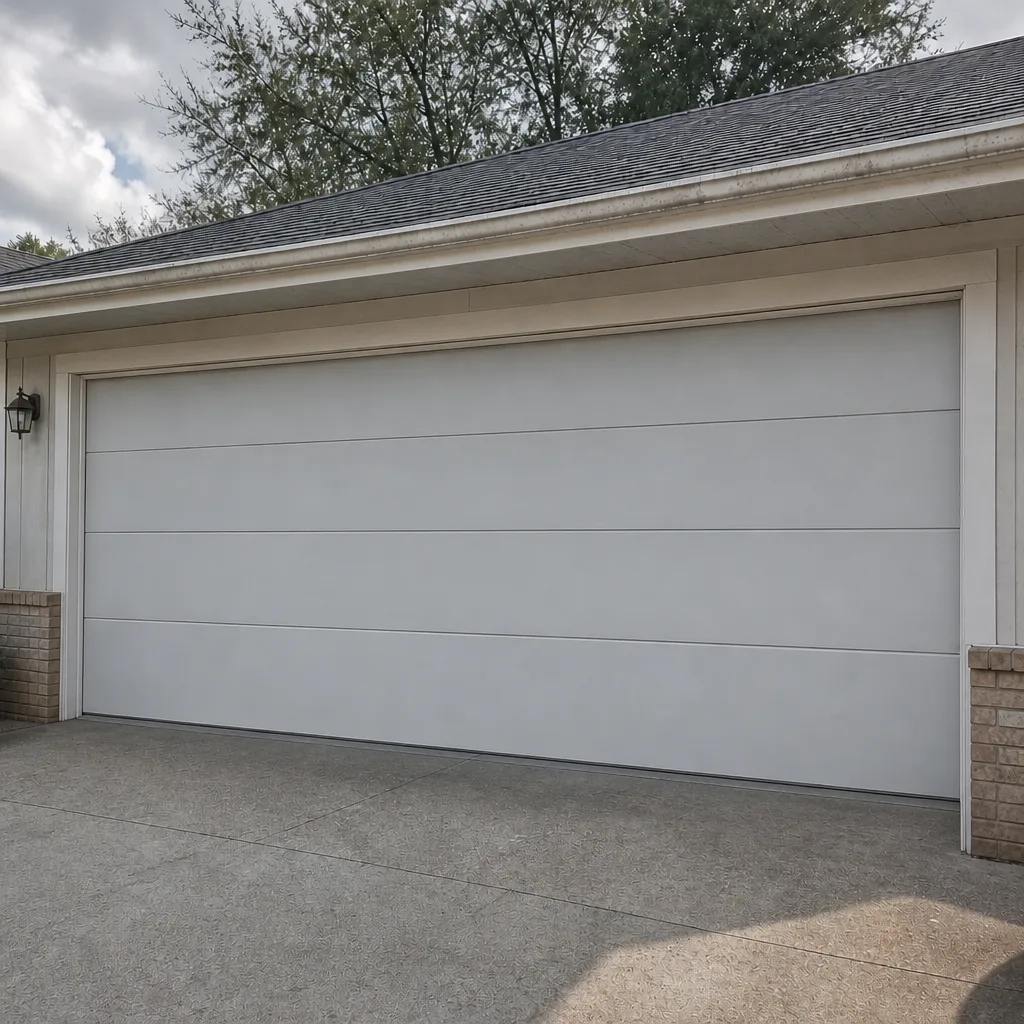 After
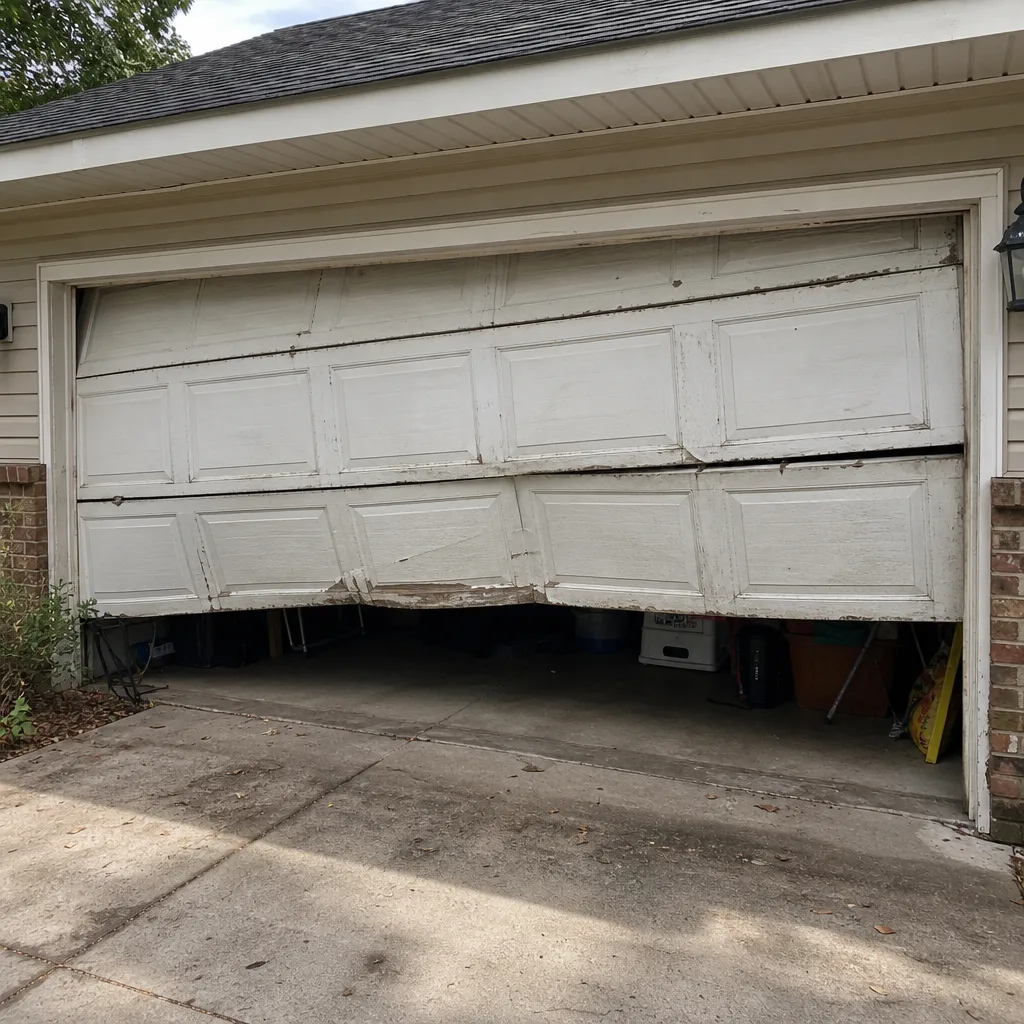 Before
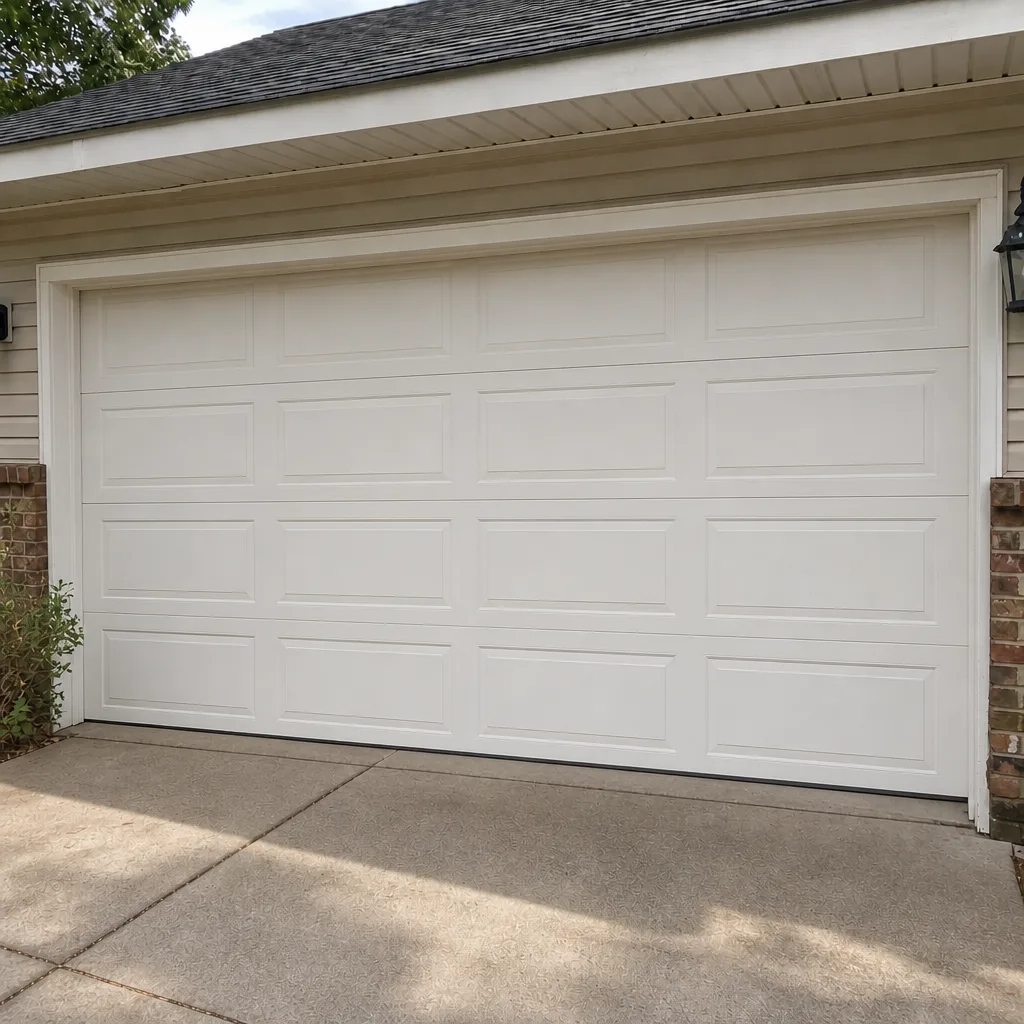 After
When to Call a Professional
Call a professional the moment a task moves from “cleaning and adjusting” to “anything holding the door’s weight.” A snapped spring, a cable that’s come off its drum, a door hanging crooked in the track, an opener that won’t reverse on an obstacle, or an opener that stopped lifting the door all land on the professional side. So does any door that feels heavy by hand after you pull the manual release. If you’re in the middle of a DIY task and a part suddenly gives way, stop and leave the door where it is until a technician can look at it. In Eden Prairie, Eden Prairie Garage Door Repair Co offers free estimates in Eden Prairie. Call (844) 860-2380, and we’ll tell you plainly which tasks you can keep and which ones we should handle.
Frequently Asked Questions
No. Torsion springs store dangerous torque when wound, and the correct tools plus the correct winding count are both essential. A slip can cause serious injury, so spring work belongs with a trained technician. If a spring breaks, keep the door down and call (844) 860-2380 for a free estimate.
Weatherstripping replacement, photo-eye realignment, remote and keypad programming, manual release operation, and track cleaning are all safe for a homeowner to handle. Tasks involving springs, cables, drums, or balance are professional-only. Tightening loose bolts and replacing a bottom seal fall in between and depend on your comfort level.
Torsion spring repair is quoted per spring, and a matched pair is usually replaced together so a pair costs roughly twice a single spring. The written estimate sets the final price before any work starts, so the number you agree to is the number you pay. Call (844) 860-2380 for an exact quote; estimates are free.
It can. A self-installed or self-adjusted door can complicate a damage claim if a part fails, and it makes responsibility harder to sort out if the door injures someone. A trained contractor typically carries their own liability coverage, which keeps that responsibility with the professional. Ask your insurance agent how a repair or install affects your coverage.
We offer emergency garage door service for failures that can’t wait, because a door stuck open is a security concern. Call (844) 860-2380 and we’ll give you a free estimate and get you on the schedule as soon as possible.
We work on LiftMaster, Chamberlain, Genie, Clopay, Amarr, Wayne Dalton, Craftsman, and Raynor systems. Knowing the brand shortens the diagnosis, whether it’s a Craftsman remote that won’t pair or a Raynor door that’s out of balance. Call (844) 860-2380 with the model and we’ll tell you what the fix likely involves.
The Bottom Line
The DIY-or-pro decision comes down to one question: does a mistake on this task cost you money, or does it cost you a hand? Routine upkeep like weatherstripping, sensor alignment, remote programming, and track cleaning is safe to keep. Anything that touches torsion springs, cables, drums, or balance is professional-only, and improvising the tools is the real danger. Where a botched DIY job would cost more to fix than a professional repair, hire the technician. Eden Prairie Garage Door Repair Co offers free estimates and a written price before work starts. Call (844) 860-2380.
Written by the team at Eden Prairie Garage Door Repair Co.